Home → Blog → Centanafadine Deep Analysis
|
Centanafadine's efficacy is remarkably consistent across seven trials and three age groups — and it consistently lands at the bottom of the non-stimulant range, roughly half of amphetamine. The interesting findings are not in the headline numbers. They are in the week-1 effect being purely inattention, in a dose-response curve that runs steeply uphill in children and downhill in adults at matched exposures, in a transporter profile that is noradrenergic rather than balanced, and in three "no difference" comparisons whose confidence intervals cannot exclude the one deficit that reached significance. |
Centanafadine: A Deep Analysis of the Primary Literature
By Ryan S. Sultan, MD
Assistant Professor of Clinical Psychiatry, Columbia University Irving Medical Center
Double Board-Certified in Adult Psychiatry & Child/Adolescent Psychiatry
Published:
|
All seven papers analyzed here are available as free PDF downloads: Centanafadine Primary Literature Archive → Every number in this analysis is traceable to a specific paper, table, or figure. Where a value was not published and I computed it, I say so explicitly and give the method. Where the papers contradict each other or the label, I say that too. |
|
Across every centanafadine trial, the standardized effect size clusters at Cohen's d 0.24 to 0.40 — below amphetamines (0.79), below methylphenidate (0.49), and at or below atomoxetine (0.45) in the Cortese 2018 network meta-analysis. The adult trials produced d 0.28 and 0.24 (study 1) and 0.37 and 0.40 (study 2); adolescents 0.12 (failed) and 0.40; children a computed 0.19 (failed) and 0.37. Onset is genuinely fast but domain-specific: in adolescents the week-1 separation is entirely inattention (-2.07 points, p=.0005), while hyperactivity-impulsivity does not separate until week 3 and stays near -1.5. Dose-response is steep in children and adolescents but flat in adult study 2 and inverted in adult study 1, despite exposure-matched doses. Transporter potency is norepinephrine-dominant, not balanced: NET IC50 6 nM, DAT 38 nM, SERT 83 nM. The only comparative data are two Otsuka-funded indirect comparisons: centanafadine was 6.58 AISRS points worse than lisdexamfetamine (95% CI 2.72-10.43), and the non-significant results against methylphenidate, atomoxetine, and viloxazine have intervals extending past 6.58, so they cannot exclude a deficit of the same size. |
Why This Analysis Exists
The trade coverage of the July 2026 Simtriyo approval has converged on two claims: that centanafadine is a first-in-class triple reuptake inhibitor, and that it offers stimulant-adjacent benefit with better tolerability. Both are defensible as far as they go. Neither survives contact with the actual trial reports without significant qualification.
I read the seven primary documents as a clinical trialist reads them — looking for the denominator behind each effect size, the week the curves actually separate, whether the dose-response makes pharmacological sense, and what the sponsor chose not to report. My own research program concerns ADHD pharmacology and the real-world consequences of treatment — including an invited 2025 JAMA Psychiatry editorial appraising the registry evidence on ADHD medication and functional outcomes — so the question I care about is not "did it beat placebo" but "what would this drug do in a clinic, relative to what I already prescribe."
Four findings emerged that I have not seen discussed anywhere.
→ See also: Simtriyo vs Vyvanse vs Adderall: what the trial numbers show
1. The Effect Size Is Consistent — and Consistently Small
Centanafadine's standardized effect size is the most stable number in the program. Across four positive dose-arms in three age groups it lands between d = 0.24 and d = 0.40. That consistency is genuinely reassuring about the drug's reality. It is also the whole problem.
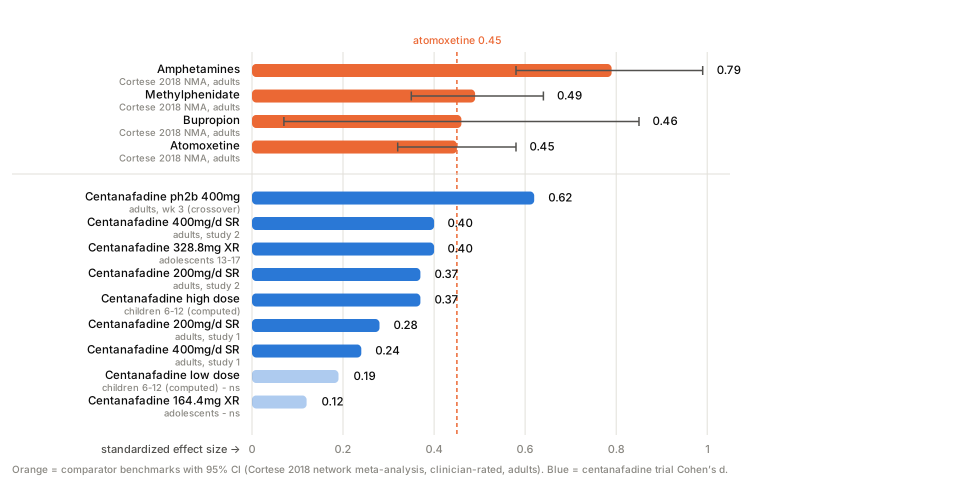
Show data table
| Agent / arm | Population | Effect size | 95% CI | Source |
|---|---|---|---|---|
| Amphetamines | Adults | 0.79 | 0.58–0.99 | Cortese 2018 NMA |
| Methylphenidate | Adults | 0.49 | 0.35–0.64 | Cortese 2018 NMA |
| Bupropion | Adults | 0.46 | 0.07–0.85 | Cortese 2018 NMA |
| Atomoxetine | Adults | 0.45 | 0.32–0.58 | Cortese 2018 NMA |
| Centanafadine 400 mg/d SR, phase 2b | Adults, week 3 | 0.62 | not published | Wigal 2020 |
| Centanafadine 400 mg/d SR | Adults, study 2 | 0.40 | not published | Adler 2022 |
| Centanafadine 328.8 mg XR | Adolescents 13–17 | 0.40 | not published | Ward 2026 |
| Centanafadine 200 mg/d SR | Adults, study 2 | 0.37 | not published | Adler 2022 |
| Centanafadine high dose | Children 6–12 | ≈0.37 (computed) | not published | Ward 2025 |
| Centanafadine 200 mg/d SR | Adults, study 1 | 0.28 | not published | Adler 2022 |
| Centanafadine 400 mg/d SR | Adults, study 1 | 0.24 | not published | Adler 2022 |
| Centanafadine low dose (failed) | Children 6–12 | ≈0.19 (computed) | not published | Ward 2025 |
| Centanafadine 164.4 mg XR (failed) | Adolescents 13–17 | 0.12 | not published | Ward 2026 |
A methodological trap worth flagging
If you try to reproduce these Cohen's d values from the published baseline standard deviations, you will get numbers about 1.6 times too large. Adult study 1's 200 mg arm, for instance: the placebo-subtracted difference was 3.15 points and baseline SD was 6.8, which would give d = 0.46 — but the published value is 0.28. Solving backwards implies a denominator SD of roughly 11.25, i.e. the trials correctly used the standard deviation of change scores, not of baseline. Anyone re-deriving these effect sizes from the baseline SD will overstate centanafadine's efficacy by more than half. I mention it because that error is easy to make and would flatter the drug.
The children's paper omits its effect size entirely
The pediatric trial in 6-to-12-year-olds is the only study in the program that reports no effect size. Using the same change-score denominator convention — validated against the adolescent trial, where it reproduces the published d to two decimals — the high-dose value comes out at approximately 0.37 and the low dose at approximately 0.19. Those are my computations, not published figures, and should be cited as such.
This matters for a specific reason. Children showed the largest absolute placebo-subtracted benefit in the entire program: 5.5 ADHD-RS-5 points, versus 4.35 in adolescents and 2.74 to 4.42 in adults. It would be easy, and wrong, to read that as the drug working best in young children. The children also had the highest baseline severity (43.1 versus about 37.5) and the most variable response, so once standardized, their effect is indistinguishable from the adolescent and adult study 2 results. The bigger point difference is scale inflation, not better efficacy.
The clinical-meaningfulness problem
The published between-treatment minimal clinically important difference for the AISRS is 10.1 points. Every placebo-subtracted difference centanafadine produced across seven trials — 2.74 to 5.5 points — falls below that threshold, and below the 6.6-point pediatric ADHD-RS threshold as well.
Here is where the sponsor's own reasoning becomes awkward. The Otsuka-funded indirect comparison invokes the 10.1-point MCID to argue that being 6.58 points worse than lisdexamfetamine "may not reach the MCID threshold" and is therefore not clinically meaningful. That argument, applied consistently, disposes of centanafadine's own advantage over placebo as well. You cannot use a threshold to dismiss your deficit against an active comparator and then ignore it when describing your own benefit. The papers do not note this.
To be fair to the drug, responder analyses read better than the continuous endpoints. In adolescents, 69.1% of the 328.8 mg group achieved at least 30% symptom improvement versus 50.3% on placebo — a number needed to treat of about 5.3. For a non-stimulant that is a respectable number, and it is the strongest efficacy argument in the entire dossier.
2. The Week-1 Effect Is Inattention Only
"Improvement as early as week 1" appears in the label, the press release, and essentially every article written about this approval. It is true. It is also considerably narrower than it sounds, and the adolescent trial reports the subscale data that shows why.
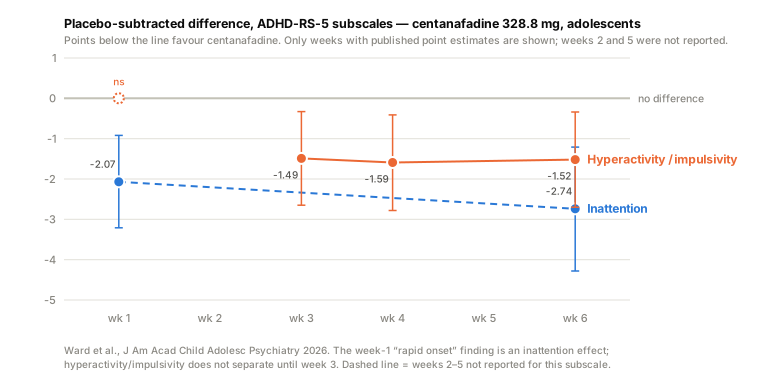
Show data table
| Week | Inattention, diff vs placebo (95% CI) | Hyperactivity/impulsivity, diff vs placebo (95% CI) |
|---|---|---|
| 1 | −2.07 (−3.21, −0.92), p=.0005 | not significant |
| 3 | not reported | −1.49 (−2.65, −0.33), p=.0118 |
| 4 | not reported | −1.59 (−2.78, −0.41), p=.0085 |
| 6 | −2.74 (−4.28, −1.21), p=.0005 | −1.52 (−2.70, −0.34), p=.0120 |
Centanafadine 328.8 mg vs placebo, adolescent trial (Ward et al., JAACAP 2026). Weeks 2 and 5 were not reported for either subscale; weeks 3 and 4 were not reported for inattention at this dose.
Clinically this is actionable. If you are treating a predominantly inattentive adolescent, centanafadine's onset profile is a genuine selling point and the effect grows over six weeks. If the presenting problem is hyperactivity and impulsivity — the child who cannot stay seated, the teenager whose impulsivity is creating real risk — you should expect nothing in the first two weeks and a modest, plateauing effect thereafter. Any conversation with a family about "working within a week" needs to specify which symptoms.
The low dose looks like noise, not a small effect
The 164.4 mg adolescent arm failed its primary endpoint, which the label handles honestly. What the papers report but do not emphasize is how it failed. At week 1 the low dose's hyperactivity/impulsivity score was significantly worse than placebo (+1.36 points, 95% CI 0.40 to 2.32, p=.0054). Its CGI-S change at week 1 was also numerically worse than placebo (−0.39 versus −0.50). Its one positive subscale signal — inattention at week 4, p=.0492 — had vanished by week 6.
That is the signature of random variation around a null, not of a real but weak effect. It is a reasonable basis for the FDA's decision not to approve 140 mg as a standalone dose, and it is why the absence of a validated lower rung in pediatrics is a real prescribing constraint rather than a technicality.
Adults: the onset claim rests on one of two identical trials
Two adult trials, same design, same doses, run concurrently. Study 2 separated from placebo at day 7. Study 1 did not separate until day 28. The "as little as 1 week" language in the paper's conclusion and the label's "as early as week 1" both generalize the more favorable result.
There is a further wrinkle: the 400 mg arm was titrated, receiving 200 mg through day 7. Any day-7 separation in that arm cannot be attributed to 400 mg, because nobody had taken 400 mg yet.
3. The Dose-Response Paradox Nobody Has Explained
This is the finding I find most genuinely puzzling, and no paper in the program addresses it.
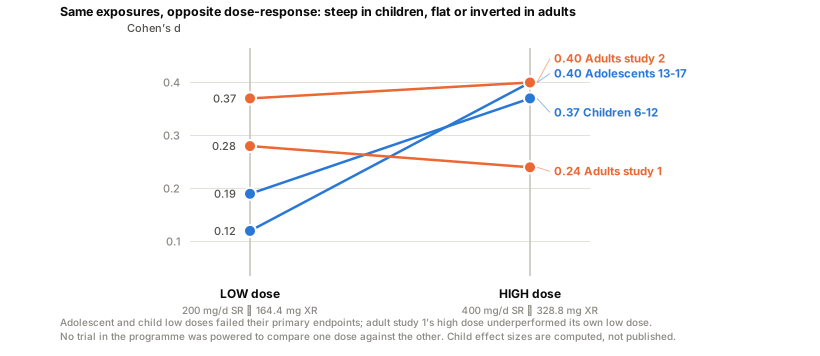
In children and adolescents the dose-response is textbook: low dose fails, high dose works, and the FDA approved only the high dose. In adults it is absent. Study 2 was flat (0.37 versus 0.40, a difference well inside overlapping intervals) and study 1 was inverted, with 200 mg/d outperforming 400 mg/d on both the point estimate and the effect size.
Candidate explanations, none of which the papers test:
- The adult placebo run-in. Both adult trials excluded placebo responders — 24.1% of run-in participants never entered the double-blind phase. Trimming placebo responders changes the distribution of treatment-effect modifiers in a way that could plausibly flatten a dose-response curve. Neither pediatric trial used a run-in.
- Different instruments and raters. Adults were assessed on the clinician-interview AISRS; children and adolescents on the ADHD-RS-5 with an informant.
- Formulation kinetics. Adults took sustained-release tablets twice daily; children took an extended-release capsule once daily. Peak-to-trough behavior across a school day differs.
- Chance. No trial in the program was powered to compare one dose against the other, and none reports a formal dose-response test. Two underpowered contrasts can easily disagree.
The phase 2 program makes this more interesting rather than less. In phase 2b, efficacy was flat across 400, 600, and 800 mg/d while tolerability collapsed — completion rates of 94%, 75%, and 44% respectively, with 10 of 11 adverse-event discontinuations occurring at 600 mg or above and nausea and appetite loss each hitting 60% at 800 mg. The authors' conclusion was that exceeding 400 mg/d "offers no clear advantage with respect to efficacy." In other words, the phase 3 adult dose was chosen on tolerability grounds, not because an exposure-response relationship had been demonstrated. The adult flat dose-response in phase 3 is consistent with that phase 2 finding; the steep pediatric dose-response is not.
Practically: in adults there is no trial-based expectation that pushing from 210 mg to 280 mg buys efficacy, and the phase 3 adverse-event data show nausea, dry mouth, and appetite loss all rising with dose. That argues for staying at the starting dose unless a specific reason to escalate emerges.
4. "Triple Reuptake Inhibitor" Oversells the Balance
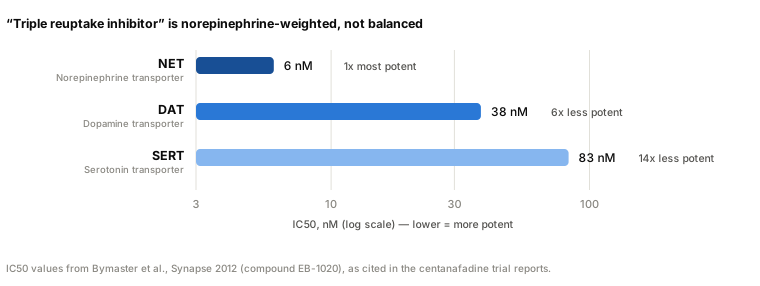
The NDSRI label is pharmacologically accurate — centanafadine does inhibit all three transporters — but it invites a mental model of balanced triple action that the binding data do not support. At clinically relevant exposures this is predominantly a noradrenergic drug, with secondary dopaminergic and comparatively modest serotonergic activity.
That reframing does useful explanatory work:
It explains the effect size. A NET-dominant reuptake inhibitor with weaker DAT activity should look like atomoxetine or viloxazine plus a little more, not like methylphenidate. That is exactly what the trials show. The efficacy is where the pharmacology predicts it should be.
It explains the inattention-first time course. Prefrontal noradrenergic signaling is more closely tied to attentional and executive function than to motor hyperactivity; the domain dissociation in Figure 2 is what you would predict from a NET-preferential agent.
It explains the abuse-liability paradox. Preclinical microdialysis showed dopamine efflux peaking around 60 minutes after dosing, versus sharp 15 to 30 minute peaks for amphetamine and methylphenidate. Rate of striatal dopamine rise, not absolute magnitude, is the principal driver of subjective reward. A drug with real DAT activity but a slow rise should show measurable abuse potential with less liking than amphetamine — which is precisely the mixed picture the human abuse-liability studies produced, and precisely why the drug ended up scheduled but with no physical dependence signal.
It also raises a question the program never tests: does the serotonergic component help at all? SSRIs are ineffective for core ADHD symptoms, and there is a reasonable pharmacological argument that 5-HT reuptake inhibition could blunt rather than augment dopaminergic benefit.
|
A caveat on that last argument, stated honestly. The "serotonin may blunt the benefit" reading is a hypothesis, and there is a real counterargument I want to flag rather than bury: atomoxetine also has meaningful serotonergic activity at clinical exposures and works perfectly well (standardized mean difference ~0.45). If serotonin transporter engagement were itself disqualifying, atomoxetine should underperform, and it does not. The more parsimonious explanation for centanafadine's ceiling may simply be norepinephrine-dominance with insufficient dopamine transporter engagement — i.e. at achievable human doses it behaves like a selective noradrenergic reuptake inhibitor, which is precisely the effect-size band it lands in. Human PET occupancy data for centanafadine exist and would settle this; I have not yet verified those figures against the primary source and will not quote numbers I have not checked. I will update this section when I have. |
The phase 3b trial in ADHD with comorbid anxiety is the first attempt to make the serotonergic activity earn its place, and its results so far are modest — a 6-point AISRS advantage over placebo at week 8 but only a 1.92-point HAM-A difference (−12.5 versus −10.6). That anxiety effect is small, and the trial remains unpublished, so it should not yet be used to justify preferential prescribing in anxious patients.
5. The Comparative Evidence: Three Nulls That Prove Less Than They Appear
No head-to-head trial of centanafadine against any active comparator exists. Everything said about how it stacks up against stimulants or other non-stimulants rests on two Otsuka-funded matching-adjusted indirect comparisons.
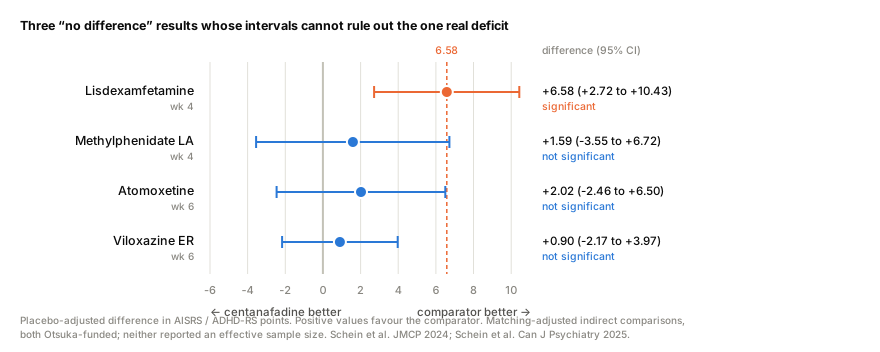
This is the single most important interpretive point in the whole dossier, and it is being reported backwards almost everywhere. The methylphenidate comparison — widely cited as showing centanafadine "performs comparably to a stimulant" — produced a point estimate of 1.59 points with a confidence interval running from −3.55 to +6.72. The interval comfortably contains 6.58, the exact deficit that was declared statistically significant against lisdexamfetamine. An underpowered null is not equivalence. The honest statement is: these analyses failed to detect a difference, with intervals wide enough to accommodate a clinically meaningful one.
What the indirect comparisons do support
The tolerability findings are more credible than the efficacy findings, and one is genuinely convincing. Centanafadine showed 9.46 fewer insomnia events per 100 patients than long-acting methylphenidate (95% CI −15.60 to −3.33, p=0.003), plus 4.68 fewer initial-insomnia events. These are the only comparative estimates in either paper published with actual confidence intervals rather than a bare "p<0.05," the direction is mechanistically coherent for a slow-onset NET-preferential agent, and it converges with the phase 2b data (insomnia 11% versus 3% on placebo, with no signal on a sleep-quality questionnaire) and with the label's adult adverse-event profile. If a patient's primary barrier to stimulant treatment is insomnia, this is a real and defensible reason to consider centanafadine.
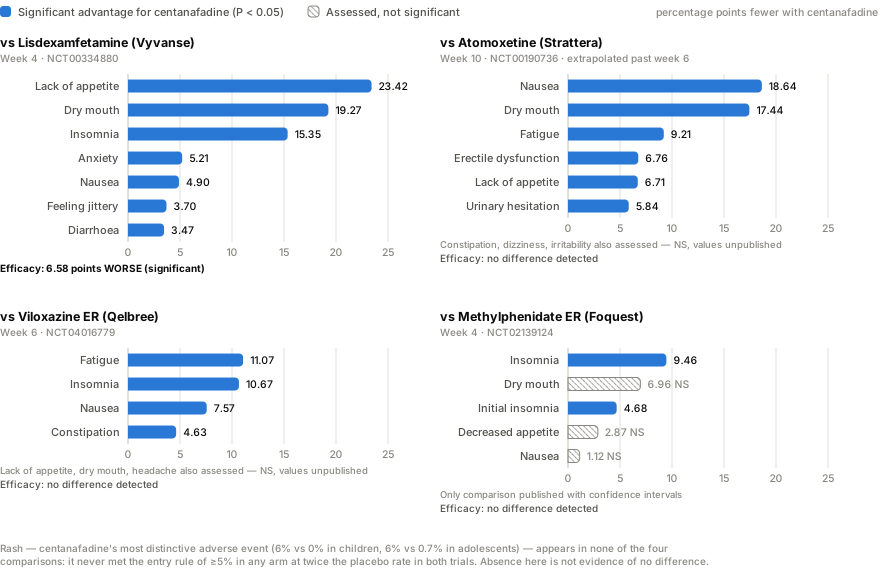
Show data table
| Comparator | Adverse event | Percentage points fewer with centanafadine | Significance | Timepoint |
|---|---|---|---|---|
| Lisdexamfetamine | Lack of appetite | 23.42 | P < 0.05 | Week 4 |
| Dry mouth | 19.27 | P < 0.05 | ||
| Insomnia | 15.35 | P < 0.05 | ||
| Anxiety | 5.21 | P < 0.05 | ||
| Nausea | 4.90 | P < 0.05 | ||
| Feeling jittery | 3.70 | P < 0.05 | ||
| Diarrhoea | 3.47 | P < 0.05 | ||
| Atomoxetine | Nausea | 18.64 | P < 0.05 | Week 10* |
| Dry mouth | 17.44 | P < 0.05 | ||
| Fatigue | 9.21 | P < 0.05 | ||
| Erectile dysfunction | 6.76 | P < 0.05 | ||
| Lack of appetite | 6.71 | P < 0.05 | ||
| Urinary hesitation | 5.84 | P < 0.05 | ||
| Constipation, dizziness, irritability | not published | Not significant | ||
| Viloxazine ER | Fatigue | 11.07 | P < 0.05 | Week 6 |
| Insomnia | 10.67 | P < 0.05 | ||
| Nausea | 7.57 | P < 0.05 | ||
| Constipation | 4.63 | P < 0.05 | ||
| Lack of appetite, dry mouth, headache | not published | Not significant | ||
| Methylphenidate ER | Insomnia | 9.46 | 95% CI 3.33–15.60; p=0.003 | Week 4 |
| Initial insomnia | 4.68 | 95% CI 0.99–8.38; p=0.01 | ||
| Dry mouth | 6.96 | 95% CI −5.63 to 19.55; p=0.28 | ||
| Decreased appetite | 2.87 | 95% CI −3.26 to 9.00; p=0.36 | ||
| Nausea | 1.12 | 95% CI −5.88 to 8.13; p=0.75 |
*Centanafadine week-10 rates were generated by polynomial extrapolation from weeks 1–6. Timepoints are not aligned across panels. Only adverse events reported in both trials of a given comparison at 5% or more in any arm and at twice the placebo rate were eligible for comparison, so an event's absence from a panel means it was never assessed — not that no difference exists. Sources: Schein et al., J Manag Care Spec Pharm 2024;30(6):528–40 (lisdexamfetamine, atomoxetine, viloxazine ER); Catillon et al., Can J Psychiatry 2025;70(8):631–8 (methylphenidate). Both Otsuka-funded.
What they do not support
The broader claim of a "significantly better safety profile" across three or four comparators does not hold at that level of generality, for reasons that compound:
- Neither analysis reports an effective sample size. This is the standard diagnostic for a matching-adjusted indirect comparison. Reweighting a 586-patient arm to match a comparator trial with 13.1% severe patients when your own trial had 4.4% requires extreme weights on a small tail. Without the effective sample size, none of the stated precision can be verified.
- The adverse-event menu was structurally favorable. Events entered only if reported in both trials at 5% or more and at twice placebo. Rash — centanafadine's most distinctive adverse event, 6% versus 0.7% in adolescents and 6% versus 0% in children, and a leading cause of discontinuation — appears in none of the safety comparisons.
- Not one adverse event favored any comparator across roughly 28 comparisons spanning four mechanistically distinct drugs. I do not read this as evidence of bias — the direction is what the pharmacology predicts, since a weaker agent at overlapping targets should generate fewer of the same adverse events. But a uniformly favourable result drawn from a favourable outcome menu is a statement about direction, not a usable estimate of how much less.
- No integrated harm endpoint. All-cause discontinuation and discontinuation due to adverse events — the outcomes that actually matter and that resist differential adverse-event reporting — were not examined in either analysis. Centanafadine's own trials do not obviously favor it here: phase 2b showed 22.8% versus 9.5% discontinuation, and pooled phase 3 completion was 78.8% against 88.8% in the methylphenidate comparator trial.
- The atomoxetine comparison extrapolated. Centanafadine's week-10 adverse-event rates were generated by polynomial extrapolation from weeks 1 to 6 against a six-month atomoxetine trial. Extrapolating an adverse-event hazard four weeks past observation will typically bend downward for exactly the events reported as most favorable — nausea and appetite loss.
- The comparator's placebo response helped. The methylphenidate trial had no placebo run-in and a 27.5% placebo response, which its own authors attributed to staff interaction. In an anchored indirect comparison, an inflated comparator placebo response shrinks the comparator's active-minus-placebo effect and mechanically helps centanafadine reach non-inferiority. The paper discloses the number without drawing the inference.
None of this means centanafadine is a bad drug or that the analyses are fraudulent. It means the comparative evidence is sponsor-generated, single-trial-per-comparator, restricted to a favorable subset of outcomes, and considerably weaker than the confident summaries suggest. A network meta-analysis across all eligible trials would be the appropriate design and would very likely widen these intervals.
6. What the Papers Do Not Say
Reading all seven documents against the label surfaced several gaps that clinicians should know about.
The pediatric suicidality signal is not in the pediatric paper. Simtriyo carries a boxed warning for suicidal ideation and behaviors in children 6 and older, and the label attributes it to higher rates in a six-week study in 6-to-12-year-olds. The only such trial is the children's phase 3. That paper reports two suicide attempts — one in each centanafadine arm, none on placebo — describes them as unrelated to treatment, reports no C-SSRS results, and does not discuss suicidality anywhere in its discussion. If you cite the children's trial clinically, cite the label alongside it.
The children's trial failed its key secondary endpoint. CGI-S did not separate from placebo at either dose (p=.14 and p=.07). This appears in the results and is never acknowledged in the discussion or conclusion, both of which describe efficacy without qualification. The global-severity measure not moving, while the symptom-count scale does, is exactly the pattern that should temper enthusiasm about clinical meaningfulness in young children.
No weight, blood pressure, heart rate, or ECG numbers appear in either pediatric paper. Assessments are listed in the methods; values are absent. For a drug with a growth-suppression warning being given to 6-year-olds, the absence of growth data from the primary publication is a substantive reporting gap. The adolescent paper does at least give categorical weight data: 4.9% of the 328.8 mg group lost 7% or more of body weight, versus 0.8% on placebo.
Adult responder rates are not extractable from the adult publication. They were prespecified and appear only in online supplements, so no adult number-needed-to-treat can be computed from the paper itself.
The approved adult regimen was never tested in a positive adult trial. Both adult phase 3 trials used sustained-release tablets twice daily. The marketed product is a once-daily extended-release capsule, and the approved adult dosing (210 mg, up to 280 mg) reaches adult efficacy through a pharmacokinetic exposure-matching bridge rather than through a trial of that regimen. This is routine regulatory practice and not a scandal, but it is worth knowing that no adult took the marketed product in a pivotal efficacy trial.
Rash may have partially unblinded the pediatric trials. The children's authors deserve credit for saying so directly: distinctive early adverse events plus detailed adverse-event disclosure during consent "had potential to confound blinding." With rash at 6% versus 0% on placebo, that concern is real, and it applies to parent-rated outcomes in a trial whose primary endpoint depends on informant report.
7. Where I Would Actually Use It
Synthesizing all of the above, my clinical position has not changed much from my first read of the label, but it is now better grounded.
Centanafadine is a real drug with a real, reproducible effect that is consistently at the bottom of the non-stimulant range, carries controlled-substance scheduling and two boxed warnings, and has the best-documented insomnia advantage of any agent in its efficacy class. It is not a stimulant alternative and it is not an atomoxetine-beater on efficacy. Its distinguishing features are the insomnia profile, the absence of physical dependence despite stimulant classification, once-daily sprinkle-capable dosing, and a mechanism unlike anything else approved.
The patient I can see it genuinely helping:
- Predominantly inattentive presentation, where the onset profile and the growing inattention effect both work in its favor
- Has had a real but incomplete or poorly tolerated response to a well-titrated stimulant
- Has failed or cannot tolerate atomoxetine or viloxazine and an alpha-2 agonist
- Where insomnia is a dominant barrier to stimulant treatment — the best-supported niche
- No cardiac contraindication, no significant tic history, and not on serotonergic polypharmacy
Where I would be cautious: children 6 to 12 (boxed suicidality warning, failed CGI-S, 9% rash, no validated lower dose, no published growth data); predominantly hyperactive-impulsive presentations (the domain where the drug does least); and anyone for whom the practical burden of a scheduled controlled substance is the reason they wanted a non-stimulant in the first place, since centanafadine does not solve that problem.
What would change my mind: a genuine head-to-head trial against methylphenidate or atomoxetine; published long-term growth and cardiovascular data in children; post-marketing clarity on the pediatric suicidality signal; and the DEA schedule, which determines the real-world prescribing friction.
Limitations of This Analysis
I want to be explicit about what this analysis cannot do.
Comparing trial-reported Cohen's d values against network meta-analytic standardized mean differences is conventional but imperfect — the two are computed differently, and the underlying trials differ in population, instrument, and era. The adult trials used a placebo run-in and the pediatric trials did not, producing placebo responses of 17.7% and 21.4% versus 38.4% and 25.0%; placebo-subtracted differences across those designs are not strictly comparable, which is itself one of my main cautions about the published cross-trial claims.
The week-by-week trajectory data needed for a full time-course analysis are not in any of these papers — they live in figures and online supplements. I have plotted only values that were published as point estimates, and marked unreported intervals as such rather than interpolating. Two of the effect sizes in Figure 1 and the child values in Figure 3 are my computations, flagged in every place they appear.
Finally: this is an educational analysis, not medical advice, and not a substitute for the prescribing information. I have no financial relationship with Otsuka. My criticisms of the sponsor's analyses are methodological, not accusations of misconduct — sponsor-funded indirect comparisons are a legitimate and common tool, and their limitations are inherent to the design rather than unique to this program.
Primary Sources
All seven documents are available for download at the Centanafadine Primary Literature Archive.
|
Phase 2: Wigal SB, Wigal T, Hobart M, Madera JJ, Baker RA, Kohegyi E, McKinney A, Wilens TE. Safety and Efficacy of Centanafadine Sustained-Release in Adults With Attention-Deficit Hyperactivity Disorder: Results of Phase 2 Studies. Neuropsychiatr Dis Treat. 2020;16:1411–1426. doi:10.2147/NDT.S242084 Adult phase 3 (2 trials): Adler LA, Adams J, Madera-McDonough J, Kohegyi E, Hobart M, Chang D, Angelicola M, McQuade R, Liebowitz M. Efficacy, Safety, and Tolerability of Centanafadine Sustained-Release Tablets in Adults With Attention-Deficit/Hyperactivity Disorder. J Clin Psychopharmacol. 2022;42(5):429–439. doi:10.1097/JCP.0000000000001575 Adolescent phase 3: Ward CL, Childress AC, Jin N, Turkoglu O, Skubiak T, Wilens TE. Centanafadine for Attention-Deficit/Hyperactivity Disorder in Adolescents: A Randomized Clinical Trial. J Am Acad Child Adolesc Psychiatry. 2026;65(6):805–817. doi:10.1016/j.jaac.2025.06.023 Pediatric phase 3: Ward CL, Wilens TE, Jin N, Turkoglu O, Skubiak T, Childress AC. Efficacy and Safety of Centanafadine for ADHD Treatment in Children: A Randomized Clinical Trial. Pediatrics Open Science. 2025. doi:10.1542/pedsos.2024-000349 Indirect comparison vs non-stimulants and lisdexamfetamine: Schein J, Cloutier M, Gauthier-Loiselle M, Catillon M, Xu C, Chan D, Childress A. J Manag Care Spec Pharm. 2024;30(6):528–540. Indirect comparison vs methylphenidate: Schein J, Catillon M, Xu C, Qu A, Lemyre A, Gauthier-Loiselle M, Cloutier M, Childress A. Can J Psychiatry. 2025;70(8):629–638. doi:10.1177/07067437251342279 Comparator effect sizes: Cortese S, Adamo N, Del Giovane C, et al. Comparative efficacy and tolerability of medications for attention-deficit hyperactivity disorder in children, adolescents, and adults: a systematic review and network meta-analysis. Lancet Psychiatry. 2018;5(9):727–738. PMID 30097390 Transporter pharmacology: Bymaster FP, et al. Synapse. 2012;66(6):522–532. doi:10.1002/syn.21538 Label: Otsuka America Pharmaceutical, Inc. SIMTRIYO (centanafadine) extended-release capsules. Full Prescribing Information. Revised 7/2026. PI PDF Author's own work cited as benchmark: Sultan RS, Saunders DC, Veenstra-VanderWeele J. JAMA Psychiatry. 2025. PubMed |
Frequently Asked Questions
What is centanafadine's effect size compared with stimulants?
Across all four positive dose-arms in the phase 3 program, centanafadine's Cohen's d is 0.24 to 0.40. Adult study 1 produced d 0.28 (200 mg/d) and 0.24 (400 mg/d); adult study 2 produced 0.37 and 0.40; adolescents 0.40 at 328.8 mg; children an estimated 0.37 at the high dose, which the paper did not report. For comparison, the Cortese 2018 network meta-analysis of adult ADHD gives clinician-rated standardized mean differences of 0.79 for amphetamines, 0.49 for methylphenidate, 0.46 for bupropion, and 0.45 for atomoxetine. Centanafadine therefore sits at the bottom of the non-stimulant range and roughly half of amphetamine. One important caveat: these are cross-study comparisons of Cohen's d against network meta-analytic SMDs, which are not perfectly commensurable, and the trials differ substantially in placebo response.
How quickly does centanafadine work?
Faster than atomoxetine, and the week-1 claim is real but narrower than it sounds. In the adolescent trial the 328.8 mg dose separated from placebo at week 1, the first post-baseline visit — but that separation was entirely in the inattention subscale (-2.07 points, 95% CI -3.21 to -0.92, p=.0005). Hyperactivity-impulsivity did not separate until week 3 (-1.49) and remained essentially flat through week 6 (-1.52). In adults the picture splits across two identically designed trials: study 2 separated at day 7, but study 1 did not separate until day 28. The label's 'as early as week 1' generalizes the more favorable of the two.
Is there a dose-response relationship for centanafadine?
It depends on the age group, which is the most puzzling feature of the program. In children and adolescents the dose-response is steep — the low dose failed its primary endpoint in both trials (d 0.12 in adolescents, an estimated 0.19 in children) while the high dose succeeded (0.40 and 0.37). In adults there is no dose-response at all: study 2 was flat (0.37 at 200 mg/d versus 0.40 at 400 mg/d) and study 1 was inverted, with the 200 mg dose outperforming 400 mg (0.28 versus 0.24). The low and high doses were exposure-matched across all four trials, so nominally equivalent exposures produced opposite dose-response patterns. No trial in the program was powered to compare doses against each other, and none of the papers addresses the discrepancy. Phase 2b found efficacy flat across 400, 600, and 800 mg/d while completion rates fell from 94% to 75% to 44%, meaning the 400 mg dose was selected on tolerability rather than on demonstrated exposure-response.
What is centanafadine's mechanism of action?
Centanafadine inhibits reuptake at the norepinephrine, dopamine, and serotonin transporters, and the FDA label additionally classifies it as a central nervous system stimulant. The 'triple reuptake inhibitor' description is accurate but misleading about balance: reported IC50 values are 6 nM at the norepinephrine transporter, 38 nM at the dopamine transporter, and 83 nM at the serotonin transporter — roughly 6-fold less potent at DAT and 14-fold less potent at SERT than at NET. Pharmacodynamically this is a predominantly noradrenergic drug with secondary dopaminergic and modest serotonergic activity. Preclinical microdialysis showed dopamine efflux peaking around 60 minutes after dosing, versus sharp 15 to 30 minute peaks for amphetamine and methylphenidate; that slower rate of striatal dopamine rise is the most plausible explanation for both the lower abuse liability signal in early studies and the smaller efficacy.
How does centanafadine compare with methylphenidate head to head?
No head-to-head trial exists against any comparator. The only comparative evidence is two Otsuka-funded matching-adjusted indirect comparisons. Against lisdexamfetamine, centanafadine was significantly worse on efficacy by 6.58 AISRS/ADHD-RS points (95% CI 2.72 to 10.43). Against methylphenidate the difference was 1.59 points (95% CI -3.55 to 6.72, p=0.55), against atomoxetine 2.02 points (95% CI -2.46 to 6.50, p=0.38), and against viloxazine ER 0.90 points (95% CI -2.17 to 3.97, p=0.57). Those three results are widely described as showing comparable efficacy, but they are underpowered nulls rather than demonstrations of equivalence: each interval extends past 6.58, the exact deficit that reached significance against lisdexamfetamine. On tolerability the same analyses favored centanafadine consistently, most credibly for insomnia versus methylphenidate (9.46 fewer events per 100 patients, 95% CI -15.60 to -3.33, p=0.003). Neither analysis reported an effective sample size, and neither examined discontinuation, weight, or cardiovascular outcomes.
Are the centanafadine effect sizes clinically meaningful?
That depends on the yardstick, and the literature contains an inconsistency worth naming. The published between-treatment minimal clinically important difference for the AISRS is 10.1 points. Every placebo-subtracted difference centanafadine produced — 2.74 to 5.5 points across all trials — falls below it, and below the 6.6-point pediatric ADHD-RS threshold as well. The sponsor's own indirect comparison invokes the 10.1-point threshold to argue that being 6.58 points worse than lisdexamfetamine is not clinically meaningful; the identical logic applies with equal force to centanafadine's own advantage over placebo, which the papers do not note. Responder analyses are more encouraging: in adolescents, 69.1% of the 328.8 mg group achieved at least 30% symptom improvement versus 50.3% on placebo, a number needed to treat of about 5.3.
Further Reading
- Centanafadine Primary Literature Archive — all seven papers as free PDF downloads with full citations
- Centanafadine (Simtriyo): What the Label Actually Says — the prescribing information, dual boxed warnings, dosing, and DEA scheduling
- The New ADHD Medications of 2024–2026 — where centanafadine sits in the wider pharmacopeia
- ADHD Pharmacology and the Natural Course of Illness
- Choosing Between Stimulants and Non-Stimulants
- ADHD Medication Titration — why a missing lower dose matters
- ADHD Medication Tolerance
- ADHD Medication Guide