Home > Psychiatric Medication Management NYC
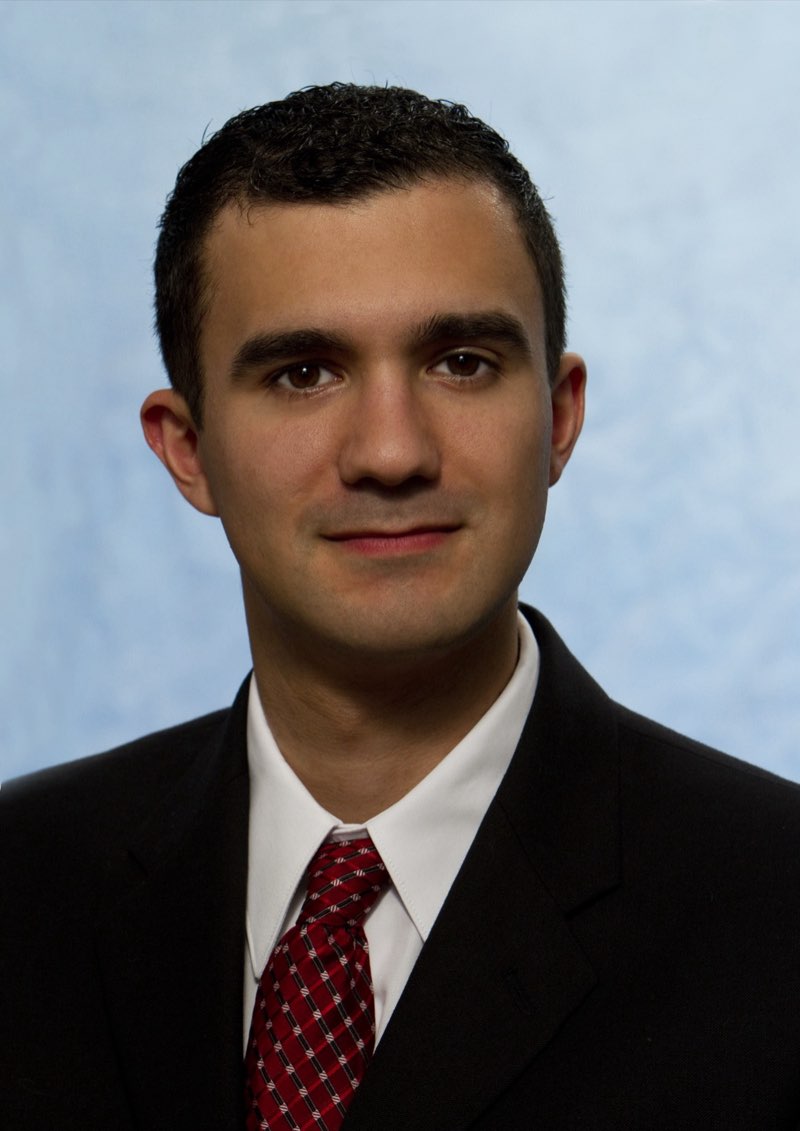
By Ryan S. Sultan, MD
Assistant Professor of Clinical Psychiatry, Columbia University Irving Medical Center
Double Board-Certified in Adult Psychiatry & Child/Adolescent Psychiatry
Published:
Quick Answer: Psychiatric Medication Management in NYCMedication management is the ongoing work of selecting, dosing, monitoring, and adjusting psychiatric medication — including managing side effects, checking drug interactions, and stopping medications that aren't helping. Much of American psychiatry compresses this into 15-minute visits, which is often inadequate for complex cases, polypharmacy, or treatment resistance. Dr. Ryan Sultan is a Columbia University psychiatrist whose published research examines psychotropic prescribing safety — including a 2019 JAMA Network Open study — and he practices medication management in Chelsea, Manhattan. |
The problem with how this is usually done
American outpatient psychiatry has largely converged on the 15-minute medication check. For a stable patient on a stable regimen, that's reasonable and efficient.
For anyone else, it is where treatment goes wrong. Fifteen minutes is not enough to reconstruct a five-year medication history, evaluate whether four concurrent medications are each doing something, distinguish a side effect from a symptom, or reconsider a diagnosis that was assigned quickly and never revisited.
So instead of subtraction, medications accumulate. A drug is added for a symptom the previous drug caused. Nothing is ever stopped, because stopping is riskier-feeling than continuing. Five years later someone is on four medications, feels no better than they did at the start, and no one can say which one is working.
That is the problem I spend most of my time on.
What I actually research
This is the page where my academic work and my clinical work are the same thing.
Antipsychotic prescribing in youth with ADHD — JAMA Network Open, 2019. We found antipsychotics were being prescribed to young people with ADHD at high rates, frequently without an appropriate indication.
ADHD medication and functional outcomes — invited JAMA Psychiatry editorial, 2025. Across the large registry studies I was asked to appraise, medication treatment was associated with reductions in criminal convictions (32–41%), substance-related emergency visits (31–35%), and motor vehicle crashes (38–42%).
Adverse outcomes of untreated ADHD — J Adolesc Health, 2021. In a nationally representative adolescent sample: suicide attempts aOR 2.9, school expulsion aOR 3.3, elevated substance use across categories.
Clozapine utilization — published work on underuse of the single most effective antipsychotic for treatment-resistant schizophrenia, and the system-level reasons it goes unprescribed.
I am also NIH NIDA K12-funded, studying substance use and mental health in young people.
The practical upshot: when a treatment decision involves ADHD pharmacology, pediatric prescribing, antipsychotic use, or clozapine, I am not reading the summary. I wrote some of the primary literature.
What I focus on
ADHD across the lifespan. Stimulant and non-stimulant selection, titration, adult late-diagnosis, treatment-resistant presentations, and prescribing in children — where the evidence is thinnest and the stakes are highest.
Deprescribing and polypharmacy review. Frequently the highest-value thing I do. Systematically evaluating whether each medication is earning its place, and stopping the ones that aren't — carefully, one at a time, with a plan.
Treatment-resistant depression. Augmentation strategy, sequencing, and honest assessment of what has genuinely been tried at adequate dose and duration versus what was abandoned at week three.
Bipolar disorder. Mood stabilizer selection, lithium monitoring, and the common error of treating bipolar depression with antidepressant monotherapy.
Clozapine and treatment-resistant psychosis. Underused nationally. I have published on why.
Medication with psychotherapy in the same visit. I also provide CBT, DBT-informed work, EMDR, and ERP. When both are indicated, one clinician can deliver both.
What I won't do
- Prescribe stimulants without a proper evaluation. ADHD diagnosis requires developmental history, functional assessment across settings, and comorbidity screening. A 20-minute telehealth visit and a rating scale is not an evaluation, and I have published on the risks of exactly that model.
- Add a medication when the answer is to remove one.
- Treat a scale score instead of a person.
- Continue something indefinitely because stopping is inconvenient.
Related
ADHD · Depression · Treatment-resistant depression · Bipolar · Schizophrenia · Anxiety · Medication vs. therapy vs. both · Second opinions
Frequently Asked Questions
What is psychiatric medication management?
The ongoing process of selecting, dosing, monitoring, and adjusting psychiatric medication — including managing side effects, checking for drug interactions, reassessing the diagnosis, and discontinuing medications that are not helping.
How often are medication management appointments?
Typically every 2 to 4 weeks while starting or adjusting a medication, extending to every 1 to 3 months once stable. More frequently for lithium, clozapine, or any regimen requiring lab monitoring.
Can you review medications another psychiatrist prescribed?
Yes. Second opinions and polypharmacy review are a substantial part of my practice. The most common finding is a regimen that accumulated during crises and was never systematically reconsidered.
Do I have to be on medication forever?
Often not. Duration depends on the condition, number of prior episodes, and how you respond. Some conditions warrant long-term treatment; many don't. Planned, monitored discontinuation is a legitimate treatment goal and one I'll raise with you rather than wait to be asked.
Do you do therapy too, or only medication?
Both. Most psychiatrists no longer provide psychotherapy. I offer CBT, DBT-informed work, EMDR, and ERP, and when someone needs both medication and therapy, one clinician can provide both.
Can medication management be done by telehealth?
Yes, with limits. Controlled substances including stimulants carry specific regulatory requirements that change periodically, and some situations require an in-person visit. I'm licensed in New York, Virginia, and Montana, and registered as an out-of-state telehealth provider in Florida.
What does medication management cost in NYC?
See what out-of-network psychiatric care costs in Manhattan for fees and how out-of-network reimbursement actually works.
Reviewed by Ryan S. Sultan, MD
Assistant Professor of Clinical Psychiatry, Columbia University Irving Medical Center
Board Certified — Adult Psychiatry (2015) and Child & Adolescent Psychiatry (2016), ABPN
NPI 1972893642
Psychotherapy training
Psychoanalytic psychotherapy — Emory University Psychoanalytic Institute; Columbia University Center for Psychoanalytic Training and Research
Cognitive Behavioral Therapy — trained at Weill Cornell Medicine during child psychiatry fellowship (Avital Falk, PhD; Angela Chiu, PhD); contributed to MATCH-ADTC workbook materials for youth
Dialectical Behavior Therapy — DBT skills within individual psychotherapy
EMDR · Exposure and Response Prevention
Certified Mind-Body Medicine Physician — Benson-Henry Institute for Mind Body Medicine, Massachusetts General Hospital (Harvard Medical School teaching affiliate)
Licensure
New York — License #275559
Virginia — License #0101269261
Montana — License #MED-PHYS-LIC-156069 (active, exp. 03/31/2027)
Florida — Registered Out-of-State Telehealth Provider #TPME5432 (telehealth only)
Verify every credential → ryansultan.com/credentials
Columbia · NewYork-Presbyterian · Google Scholar · PubMed · ORCID 0000-0003-2061-247X
Practice: Integrative Psych, 80 Eighth Avenue, Chelsea, Manhattan, NY 10011
Last updated: August 7, 2026
Educational information only. Not medical advice. Reading this page does not establish a physician–patient relationship.