Home > ERP Therapy for OCD NYC
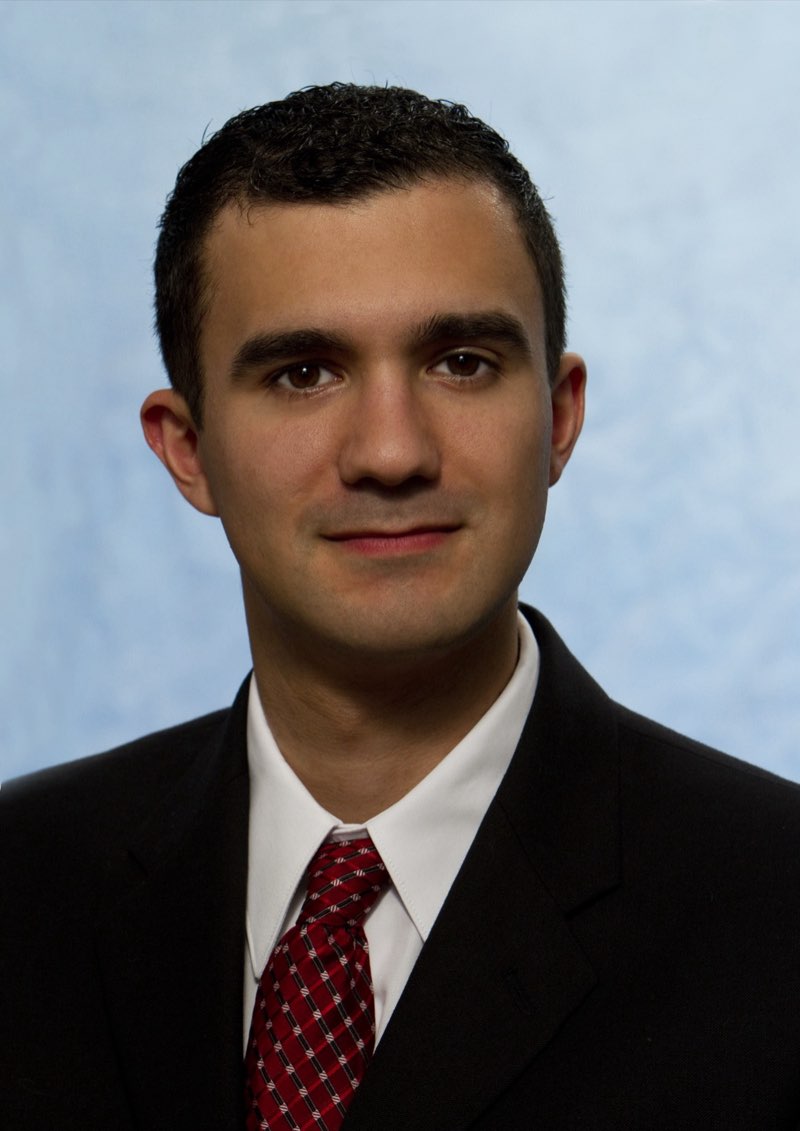
By Ryan S. Sultan, MD
Assistant Professor of Clinical Psychiatry, Columbia University Irving Medical Center
Double Board-Certified in Adult Psychiatry & Child/Adolescent Psychiatry
Published:
Quick Answer: ERP Therapy for OCD in NYCExposure and Response Prevention (ERP) is the first-line psychotherapy for OCD, endorsed by the APA, NICE, and the International OCD Foundation. You approach what triggers the obsession while refraining from the compulsion or mental ritual that normally follows. General talk therapy is not equivalent and can make OCD worse, because reassurance functions as a compulsion. A typical course runs 12 to 20 sessions; in moderate to severe OCD, combining ERP with medication generally outperforms either alone. Dr. Ryan Sultan, a Columbia University psychiatrist in Chelsea, Manhattan, offers ERP and OCD medication management. |
The thing you most need to know
Most therapy marketed for OCD is not ERP, and general talk therapy can make OCD worse.
The evidence behind that sentence is measured. In the reference randomized trial, published in 2005, 62% of patients treated with exposure and ritual prevention responded within 12 weeks, against 8% on placebo; among those who completed the full course, 86% responded (Foa et al., American Journal of Psychiatry). Few treatments anywhere in psychiatry separate from placebo that widely. Yet most people with OCD never receive it, and what they receive instead can feed the disorder. Here's why.
OCD runs on a loop: an intrusive thought produces anxiety, and a compulsion, visible or purely mental, temporarily relieves it. The relief reinforces the loop. Anything that provides relief functions as a compulsion.
Reassurance provides relief. So when a well-meaning therapist repeatedly helps you examine whether the feared thing could really happen, discusses evidence for and against, and reassures you that you are not dangerous, contaminated, or immoral, that conversation is a compulsion. It feels like therapy. It strengthens the disorder.
People spend years in supportive therapy for OCD getting worse and concluding they are untreatable. They are not untreatable. They were not treated.
How treatment starts
ERP begins with a 60 to 90 minute evaluation, and the evaluation earns its length. I map the full inventory of obsessions, compulsions, avoidance, and mental rituals, take a baseline severity score on the Yale-Brown Obsessive Compulsive Scale, rule out conditions that imitate OCD, and go through prior treatment in detail: what therapy was actually delivered, and what medication at what dose for how long. That last question matters because much of what arrives labeled treatment-resistant turns out to be undertreated. You leave the evaluation with a diagnosis, a number, and a plan.
What ERP actually involves
ERP does the opposite. You approach what triggers the obsession and then do not perform the compulsion. Anxiety rises, and without the compulsion to cut it short, it falls on its own. Repeated, the brain learns that the feared outcome doesn't follow and that the anxiety is survivable.
Structure:
- Assessment. Mapping obsessions, compulsions, avoidance, and — critically — mental rituals, which patients often don't recognize as compulsions.
- Hierarchy. Ranking triggers by distress, usually 0–100.
- Graded exposure. Starting where it's hard but doable, not at the top.
- Response prevention. The essential half. Exposure without response prevention is just distress.
- Generalization. Between-session practice. This is where most of the gain occurs.
It is uncomfortable by design. The discomfort is the mechanism, and a treatment that never makes you anxious is not treating OCD. A typical course runs 12 to 20 sessions, with meaningful change often visible by session 6 to 8, and the skills continue working after the sessions end because you keep applying them.
The presentations that get missed
Contamination and checking are recognized. The delay for everyone else is long: in a 2021 study of 100 outpatients with OCD, the average gap between first symptoms and diagnosis was 12.8 years (Ziegler et al., PLOS One). These presentations are routinely missed:
- Harm OCD — intrusive thoughts about harming others. Frequently misdiagnosed as psychosis or a personality disorder. It is neither, and people with harm OCD are not dangerous.
- Pedophilia OCD (POCD) — intrusive thoughts about children in someone with no sexual interest in children. Among the most distressing presentations in psychiatry and among the most catastrophically mishandled by clinicians who don't recognize it.
- Sexual orientation OCD — compulsive doubt about one's orientation.
- Relationship OCD — compulsive doubt about a partner or the relationship.
- Scrupulosity — religious or moral obsessions with compulsive confession, prayer, or reassurance-seeking.
- "Pure O" — a misnomer. There are always compulsions; they are mental rather than observable.
If any of these describe you and a previous clinician reacted with alarm rather than recognition, that reaction came from a gap in the clinician's training. It says nothing about you. All of these presentations respond to the same ERP described above.
Medication
SSRIs are effective for OCD, with two differences from depression treatment that are frequently mishandled:
- Higher doses. OCD generally requires doses well above standard antidepressant dosing. A meta-analysis of nine fixed-dose randomized trials covering 2,268 patients found higher SSRI doses outperformed low and medium doses for OCD, a dose-response pattern that doesn't appear in depression (Bloch et al., Molecular Psychiatry, 2010). The same trials showed more side-effect dropouts at higher doses, which is an argument for careful titration rather than for staying low.
- Longer trials. Response can take 10–12 weeks. Declaring failure at 4 weeks is common and premature.
Clomipramine remains effective for treatment-resistant cases; in the Foa 2005 trial it produced a 42% response on its own. Antipsychotic augmentation has evidence in partial responders, though as the author of a 2019 JAMA Network Open study of 187,563 youths on antipsychotic prescribing, I use it deliberately and with clear stopping rules rather than by default.
Combination treatment, ERP plus medication, generally outperforms either alone in moderate to severe OCD. As a psychiatrist trained in ERP, I can run both arms in the same treatment rather than coordinating across two offices.
What a course of ERP looks like: a composite example
This is a composite drawn from multiple patients, with identifying details changed. It is illustrative, and no outcome is guaranteed.
A software engineer in his mid-thirties has spent two years unable to ride the subway. Contamination obsessions drive a 90-minute evening shower ritual, separate "clean" and "dirty" zones in his apartment, and a hand-washing count his cracked knuckles make visible. Two prior therapists worked on "stress management." His symptoms grew around the accommodations.
The evaluation puts his baseline Y-BOCS in the moderate-to-severe range. We build a hierarchy: touching his own doorknob without washing sits near the bottom, holding a subway pole through a full commute near the top. Sessions work up the ladder while response prevention holds: showers capped and timed, zones dismantled one at a time, washing delayed and then dropped. He does the assigned exposures between sessions, which is where most of the change happens. By session 8 he's riding the subway with gloves; by session 14, without them. His Y-BOCS is in the mild range at week 16, and we taper to monthly maintenance while he keeps running his own exposures.
Who this fits, and when to go elsewhere
A good fit: adults, adolescents, and children with OCD in any presentation; people who've done years of talk therapy without ERP; people who want ERP and medication managed together by one clinician; people whose prior "failed" medication trials were never run at OCD doses for OCD durations.
When another setting is right, I'll say so and help arrange it:
- Severe OCD that needs daily ERP hours. Intensive outpatient and residential OCD programs exist for a reason, and when symptoms consume most of the day they outperform weekly sessions. I refer out and resume care afterward.
- Active substance withdrawal. Medically supervised withdrawal management comes first; ERP requires a stable nervous system to produce learning.
- Primary psychosis. Delusional conviction without obsessional doubt calls for different treatment, and the evaluation is designed to tell the two apart.
Cost and how to start
The practice is out-of-network with all insurers. You pay directly and receive a superbill to submit for reimbursement; many PPO plans cover a portion of out-of-network care once the deductible is met. Before booking, it's worth checking your out-of-network benefits, and the full fee reasoning is on the fees and insurance page.
The initial evaluation runs 60 to 90 minutes. If your OCD has already outlasted one course of the wrong therapy, the corrective step is specific: schedule a consultation and ask for ERP by name.
Related
OCD · CBT · Medication management · Anxiety · ADHD and OCD
Frequently Asked Questions
What is ERP therapy?
Exposure and Response Prevention: graded, deliberate exposure to feared triggers while refraining from the compulsion or mental ritual that normally follows. It is the first-line psychotherapy for OCD, endorsed by the APA, NICE, and the International OCD Foundation.
Is ERP the same as CBT?
ERP is a specific form of CBT, but general CBT is not sufficient for OCD. Cognitive work that examines evidence for and against feared outcomes can function as reassurance, which is itself a compulsion. Ask any provider whether they do ERP specifically, not whether they do CBT.
Why did years of talk therapy not help my OCD?
Most likely because it wasn't ERP. Supportive therapy for OCD frequently delivers reassurance, which relieves anxiety in the moment and reinforces the obsessive-compulsive cycle over time. This is common and it is not a sign that your OCD is untreatable.
How long does ERP take?
Typically 12 to 20 sessions, with meaningful change often appearing by session 6 to 8. Between-session practice drives most of the improvement.
Do I need medication as well as ERP?
Not always. For mild to moderate OCD, ERP alone is often sufficient. For moderate to severe OCD, combination treatment generally outperforms either alone. OCD medication requires higher doses and longer trials than depression treatment, which is frequently gotten wrong.
Are intrusive thoughts about harming someone dangerous?
No. Intrusive thoughts in OCD are ego-dystonic — they are experienced as horrifying and contrary to your values, which is precisely why they cause such distress. This presentation is well recognized in specialist OCD treatment and responds to ERP. The distress it causes is a feature of the disorder, not evidence of risk.
How well does ERP work?
In the reference randomized trial, published by Foa and colleagues in the American Journal of Psychiatry in 2005, 62% of patients treated with exposure and ritual prevention responded by week 12, versus 42% on clomipramine and 8% on placebo. Among patients who completed the full ERP course, 86% responded.
Can ERP be done by telehealth?
Yes. ERP adapts well to video sessions, since many exposures belong in your real environment anyway: your kitchen, your bathroom, your commute. I provide ERP in the Chelsea office and by telehealth to patients in New York, Virginia, and Montana, plus Florida under telehealth registration.
Reviewed by Ryan S. Sultan, MD
Assistant Professor of Clinical Psychiatry, Columbia University Irving Medical Center
Board Certified — Adult Psychiatry (2015) and Child & Adolescent Psychiatry (2016), ABPN
NPI 1972893642
Psychotherapy training
Psychoanalytic psychotherapy — Emory University Psychoanalytic Institute; Columbia University Center for Psychoanalytic Training and Research
Cognitive Behavioral Therapy — trained at Weill Cornell Medicine during child psychiatry fellowship (Avital Falk, PhD; Angela Chiu, PhD); contributed to MATCH-ADTC workbook materials for youth
Dialectical Behavior Therapy — DBT skills within individual psychotherapy
EMDR · Exposure and Response Prevention
Certified Mind-Body Medicine Physician — Benson-Henry Institute for Mind Body Medicine, Massachusetts General Hospital (Harvard Medical School teaching affiliate)
Licensure
New York — License #275559
Virginia — License #0101269261
Montana — License #MED-PHYS-LIC-156069 (active, exp. 03/31/2027)
Florida — Registered Out-of-State Telehealth Provider #TPME5432 (telehealth only)
Verify every credential → ryansultan.com/credentials
Columbia · NewYork-Presbyterian · Google Scholar · PubMed · ORCID 0000-0003-2061-247X
Practice: Integrative Psych, 80 Eighth Avenue, Chelsea, Manhattan, NY 10011
Last updated: August 8, 2026
Educational information only. Not medical advice. Reading this page does not establish a physician–patient relationship.