Home > Treatment-Resistant Depression NYC
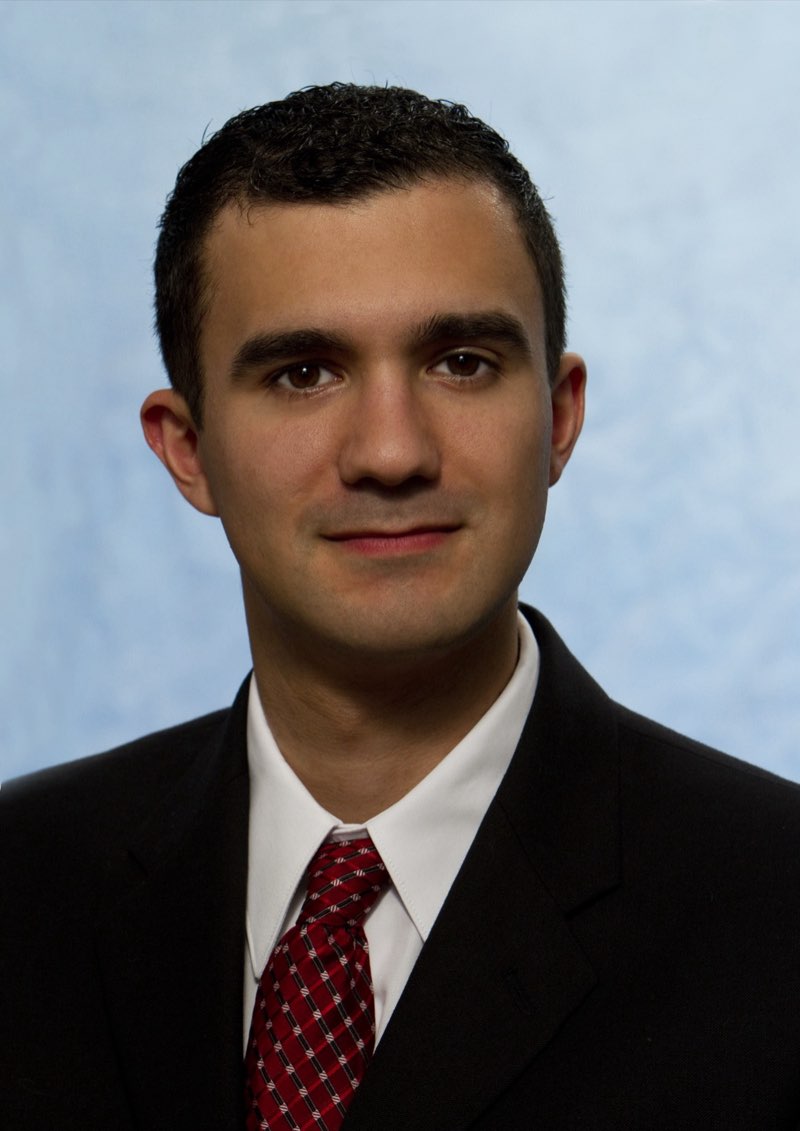
By Ryan S. Sultan, MD
Assistant Professor of Clinical Psychiatry, Columbia University Irving Medical Center
Double Board-Certified in Adult Psychiatry & Child/Adolescent Psychiatry
Published:
Quick Answer: Treatment-Resistant Depression in NYCTreatment-resistant depression means two or more adequate antidepressant trials (a therapeutic dose sustained six to eight weeks) without remission. In the STAR*D trial (2006), step-by-step remission rates were 36.8%, 30.6%, 13.7%, and 13.0%, with cumulative remission approaching 67%. A large share of apparent resistance turns out to be inadequate trials, an undiagnosed condition such as bipolar disorder or ADHD, or an untreated medical contributor. Where it's genuinely resistant, the options are real: lithium and other augmentation, esketamine, intravenous ketamine, TMS, and ECT. Dr. Ryan Sultan is a Columbia University psychiatrist, published TRD researcher, and Emory-trained in neuromodulation, practicing out-of-network in Chelsea, Manhattan; initial evaluations run 90 minutes. |
Remission rates drop sharply as antidepressant trials accumulate. In STAR*D, the largest sequenced depression treatment study to date (Rush and colleagues, American Journal of Psychiatry, 2006), 36.8% of patients remitted at the first treatment step, 30.6% at the second, then 13.7% and 13.0% at the third and fourth. That falloff after two failed steps is why the field defines treatment resistance at two adequate trials, and why continuing to cycle through similar antidepressants past that point rarely pays off. The same study carries the good news: cumulative remission across all four steps approached 67%.
Most people arriving at this page have been depressed for years and have concluded they're the exception nothing works for. Usually they're not, and the work is figuring out which of several fixable problems has been masquerading as resistance.
What I bring
I've worked on ketamine for treatment-resistant depression since my residency training at Emory. In 2014 I published one of the first descriptions of subanesthetic ketamine given as pre-treatment before ECT, distinct from the prior literature, which had used ketamine as the anesthetic agent during ECT. (Sultan RS, Riva-Posse P, Garlow SJ, Schwartz AC. Psychosomatics. 2014;55(4):396–399.)
That paper is a single case report, and I'll describe it as one: a 52-year-old man with four years of treatment-resistant depression and catatonic features whose Hamilton score fell from 34 to 22 within 24 hours of a 0.5 mg/kg infusion, then to 7 at four weeks following a course of ECT. Multiple interventions were started concurrently, so the effect can't be cleanly attributed to ketamine alone; the paper says so explicitly. It was a proof of concept, and efficacy evidence came later, from randomized trials run by other groups.
I mention it because it's where my interest in this began. Alongside it: neuromodulation training at Emory, and an Assistant Professorship of Clinical Psychiatry at Columbia.
First: is it actually resistant?
The formal definition is two or more adequate antidepressant trials in the current episode without remission. Adequate carries the weight: a therapeutic dose, sustained six to eight weeks.
Apply that honestly and a large share of "treatment-resistant" histories turn out to be:
Inadequate trials. Four weeks at a starting dose. Three medications tried in six months, none long enough. Stopped at the first side effect without a dose adjustment attempt.
Wrong diagnosis. In rough order of frequency:
- Bipolar disorder: depression that doesn't respond to antidepressants, or responds then destabilizes, should prompt a careful bipolar screen. Average diagnostic delay is six to ten years.
- ADHD: a lifetime of unexplained underperformance produces depression that is a reasonable response to circumstances. Antidepressants don't fix the circumstances.
- PTSD: trauma-related depression that hasn't been identified as such.
- Autism: late-identified autistic adults are frequently treated for depression for years first.
Untreated contributors. Active alcohol or cannabis use. Sleep apnea. Hypothyroidism. Chronic pain. An unaddressed life situation that no medication can resolve.
No psychotherapy. A surprising number of TRD referrals have never had an adequate course of evidence-based psychotherapy. That is not treatment resistance.
I work through all of this before escalating. It is unglamorous and it is where most of the wins are.
When it is genuinely resistant
Augmentation, adding to rather than replacing:
- Lithium: long-established evidence and substantially underused. In a meta-analysis of 48 randomized trials covering 6,674 participants (Cipriani and colleagues, BMJ, 2013), lithium reduced the odds of suicide in mood disorders compared with placebo (odds ratio 0.13). It requires blood level and renal/thyroid monitoring, which is a scheduling problem rather than a reason to skip the drug.
- Thyroid hormone (T3): evidence from STAR*D, well tolerated.
- Atypical antipsychotics: aripiprazole, quetiapine, brexpiprazole, and cariprazine all carry TRD augmentation indications. Effective, with real metabolic and movement-disorder costs. As the author of a 2019 JAMA Network Open study on antipsychotic prescribing, I use these with explicit stopping rules rather than indefinitely.
Switching class, for cases where the first agents shared a mechanism.
Esketamine (Spravato): FDA-approved for TRD in 2019. Intranasal, administered in a certified setting under a REMS program with two hours of post-dose monitoring. Rapid onset, sometimes within hours, which matters where risk is high.
Intravenous ketamine: off-label, with substantial supporting evidence. The foundational study came from Zarate and colleagues at NIMH (Archives of General Psychiatry, 2006): a randomized, placebo-controlled crossover trial in 18 patients with treatment-resistant depression, showing significant improvement within 110 minutes of a single 0.5 mg/kg infusion, with 71% meeting response criteria the next day. Durability is the honest limitation. In that trial only 35% held their response at one week, so any ketamine plan needs a maintenance strategy attached before the first infusion, and mine always do.
Ketamine combined with ECT. Where my own published work began, in a 2014 case report. The evidence base since remains thin and this is not a routine outpatient intervention. Where it's indicated I coordinate referral to a center that provides it.
TMS: FDA-cleared, non-invasive, typically about 30 sessions over six weeks. No systemic side effects, no anesthesia, no cognitive effects. Reasonable evidence, and a good fit for people who can't tolerate medication.
ECT: the most effective treatment available for severe depression, particularly with psychotic features or catatonia, with response rates well above anything else. Cognitive side effects are real and mostly transient, and modern unilateral ultra-brief pulse technique has substantially reduced them. It remains stigmatized far out of proportion to its risk profile, and for the sickest patients it is often the right answer.
How I work
Visit 1 (90 min). Full re-evaluation from the beginning; I don't inherit the existing diagnosis. Complete treatment history with doses and durations. Systematic differential.
Then a written sequence. What to try, in what order, with defined trial durations and decision points, so nobody is guessing at month four whether something is working.
Neuromodulation referral where indicated. I'll tell you when TMS or ECT is the right next step and coordinate the referral rather than continuing to cycle medications.
What this looks like: a composite case
The following is a composite drawn from many patients, with identifying details changed. A 45-year-old engineering manager arrived describing "ten years of treatment-resistant depression" and a list of seven failed medications. His records showed three adequate trials and four that never reached a therapeutic dose or lasted past week five. He also snored loudly enough that his partner had moved to the guest room years earlier, and nobody had ever asked him about it. A sleep study found moderate obstructive apnea. He'd never had a structured course of psychotherapy.
The sequence we ran: CPAP, one properly dosed SNRI trial with an eight-week endpoint, and weekly CBT. That got him better but short of remission, so we added lithium with level monitoring. Four months in, his PHQ-9 had fallen from 19 to 6 and held. Of the seven "failures" on his original list, most had simply never been given the chance to work, and the two conditions actually driving his symptoms had never been on anyone's list.
Who this practice fits, and when to go elsewhere
This practice fits people whose depression has outlasted one or more prescribers, who want the full history re-examined rather than inherited, and who can work with an out-of-network model. It's built for exactly this problem: second opinions, diagnostic re-evaluation, augmentation managed with defined decision points, and coordination into esketamine, TMS, or ECT when medication has had its fair chance.
Some situations belong elsewhere, and I'll say so at the first visit. I don't administer esketamine, IV ketamine, TMS, or ECT in the office; those happen at certified or hospital-based centers, and my role is selecting the right one and managing everything around it. An active suicidal crisis needs an emergency department today. Depression with psychotic features usually warrants hospital-level care first. And if budget is the binding constraint, an in-network psychiatrist you can see consistently beats an out-of-network one you can afford twice; several excellent NYC hospital clinics run TRD programs with in-network billing. I refer out in all of these situations.
Cost and booking
The practice is out-of-network with all insurance plans. You pay directly and receive a superbill to submit for reimbursement; many NYC plans with out-of-network benefits reimburse a meaningful share of the fee once the deductible is met. The numbers are laid out at fees and out-of-network costs, and you can estimate what your own plan would cover at check your out-of-network benefits.
For treatment-resistant cases I book the full 90-minute initial evaluation, and it helps considerably if you bring prior records, medication lists with doses, and any lab work. Schedule a consultation.
Related
Depression · Bipolar · Medication management · Second opinions · ADHD · PTSD · Bipolar vs BPD
When Depression Becomes an Emergency
Seek Emergency Care Immediately If:
988 Suicide and Crisis Lifeline: Call or text 988 (24/7) |
Depression that has resisted treatment for years carries elevated suicide risk precisely because it has gone on so long. If you are not in immediate crisis but are having suicidal thoughts, that warrants same-day or next-day psychiatric evaluation rather than a wait-and-see approach.
Frequently Asked Questions
What is treatment-resistant depression?
Failure to achieve remission after two or more adequate antidepressant trials in the current episode, where adequate means a therapeutic dose sustained for six to eight weeks. Trials that were too short or too low-dose don't count toward the definition.
How do I know if my depression is truly treatment-resistant?
Review the actual doses and durations of each trial, and confirm the diagnosis. Undiagnosed bipolar disorder, ADHD, PTSD, sleep apnea, and active substance use are common findings in apparent treatment resistance and change the treatment entirely.
Does ketamine work for depression?
Both intravenous ketamine and intranasal esketamine produce rapid antidepressant effects in treatment-resistant depression, sometimes within hours. Esketamine is FDA-approved under a REMS program requiring administration in a certified setting. The main open question is durability, which generally requires a maintenance plan.
Is TMS effective for depression?
Yes. Transcranial magnetic stimulation is FDA-cleared for treatment-resistant depression, typically involving about 30 sessions over six weeks. It has no systemic side effects and requires no anesthesia, which makes it a good option for people who can't tolerate medication.
Is ECT still used?
Yes, and it remains the most effective treatment available for severe depression, particularly with psychotic features or catatonia. Cognitive side effects are real and largely transient, and modern technique has substantially reduced them. It is stigmatized well out of proportion to its actual risk profile.
What is lithium augmentation?
Adding lithium to an existing antidepressant. It has long-standing evidence in treatment-resistant depression, is substantially underused, and randomized trials show it reduces suicide risk in mood disorders. It requires blood level, kidney, and thyroid monitoring.
How much does treatment-resistant depression care cost in NYC?
This practice is out-of-network with all insurance. You pay directly and receive a superbill; plans with out-of-network benefits typically reimburse a portion of the fee after the deductible. Esketamine, TMS, and ECT are administered at outside centers, many of which bill insurance directly. Fee details are at ryansultan.com/out-of-network-psychiatrist-cost-nyc.
Should I stop my current medication before a consultation?
No. Stay on your current regimen. Stopping an antidepressant abruptly can cause discontinuation symptoms and destabilize mood, and seeing how you do on your current medication makes the evaluation more informative. Any changes happen after the evaluation, on a written taper or cross-titration plan.
Reviewed by Ryan S. Sultan, MD
Assistant Professor of Clinical Psychiatry, Columbia University Irving Medical Center
Board Certified — Adult Psychiatry (2015) and Child & Adolescent Psychiatry (2016), ABPN
NPI 1972893642
Psychotherapy training
Psychoanalytic psychotherapy — Emory University Psychoanalytic Institute; Columbia University Center for Psychoanalytic Training and Research
Cognitive Behavioral Therapy — trained at Weill Cornell Medicine during child psychiatry fellowship (Avital Falk, PhD; Angela Chiu, PhD); contributed to MATCH-ADTC workbook materials for youth
Dialectical Behavior Therapy — DBT skills within individual psychotherapy
EMDR · Exposure and Response Prevention
Certified Mind-Body Medicine Physician — Benson-Henry Institute for Mind Body Medicine, Massachusetts General Hospital (Harvard Medical School teaching affiliate)
Licensure
New York — License #275559
Virginia — License #0101269261
Montana — License #MED-PHYS-LIC-156069 (active, exp. 03/31/2027)
Florida — Registered Out-of-State Telehealth Provider #TPME5432 (telehealth only)
Verify every credential → ryansultan.com/credentials
Columbia · NewYork-Presbyterian · Google Scholar · PubMed · ORCID 0000-0003-2061-247X
Practice: Integrative Psych, 80 Eighth Avenue, Chelsea, Manhattan, NY 10011
Last updated: August 8, 2026
Educational information only. Not medical advice. Reading this page does not establish a physician–patient relationship.