Home > Panic Disorder Treatment NYC
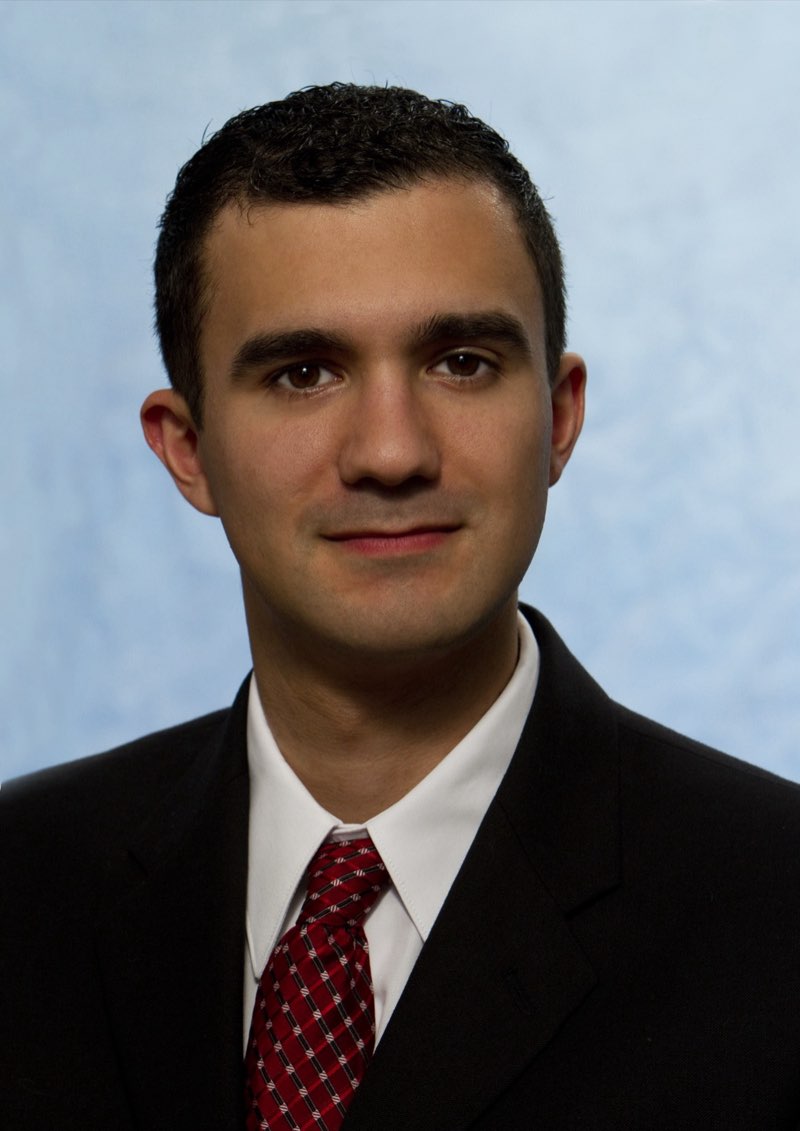
By Ryan S. Sultan, MD
Assistant Professor of Clinical Psychiatry, Columbia University Irving Medical Center
Double Board-Certified in Adult Psychiatry & Child/Adolescent Psychiatry
Published:
Quick Answer: Panic Disorder Treatment in NYCPanic disorder affects an estimated 2.7 percent of US adults in a given year and 4.7 percent over a lifetime (National Comorbidity Survey Replication, 2001–2003). It's recurrent unexpected panic attacks followed by at least a month of worry about further attacks or behavior change to avoid them. CBT with interoceptive exposure, deliberately inducing the physical sensations of panic in a controlled setting, is first-line; most people respond within 12 to 16 sessions and the gains hold after treatment ends. SSRIs are effective and often combined with CBT. Dr. Ryan Sultan is a Columbia University psychiatrist in Chelsea, Manhattan providing both the therapy and the medication management. |
Panic disorder affected an estimated 2.7 percent of US adults in the past year, and 4.7 percent experience it at some point in life, per the National Comorbidity Survey Replication (2001–2003). The condition hits hard for its size: 44.8 percent of past-year cases involved serious impairment on the Sheehan Disability Scale. It's also among the most treatable conditions in psychiatry, and among the most frightening to have. Both facts matter.
What it is
Panic disorder requires recurrent unexpected panic attacks, meaning attacks that arrive without an obvious trigger, plus at least a month of either persistent worry about more attacks or behavior change designed to prevent them.
That second part is where the disorder actually lives. The attacks are terrible; the anticipatory fear and the shrinking of your life around avoiding them is what makes it a disorder. People stop taking the subway, then stop going to certain neighborhoods, then stop leaving a defined radius. That progression is agoraphobia, and it develops secondary to panic disorder frequently enough that it needs treating as part of the same problem.
A panic attack on its own is not panic disorder. That distinction is here.
Rule out first
Panic symptoms overlap with real medical emergencies, and many people have had a cardiac workup before arriving at a psychiatric diagnosis. That workup was appropriate.
Worth confirming: thyroid function, cardiac arrhythmia (particularly supraventricular tachycardia, which produces sudden palpitations and a surge of fear and is regularly misdiagnosed as panic), asthma, vestibular disorders, and stimulant or caffeine intake. Alcohol and benzodiazepine withdrawal produce panic attacks reliably, including interdose withdrawal in someone taking a short-acting benzodiazepine regularly.
The treatment that works
CBT with interoceptive exposure. This is the specific protocol to ask for, and most general talk therapy for panic omits it.
Panic disorder is maintained by catastrophic interpretation of normal bodily sensations. A racing heart means a heart attack. Dizziness means collapse. Depersonalization means losing your mind. Because those interpretations are terrifying, the sensations escalate, which confirms the interpretation.
Interoceptive exposure breaks that loop by deliberately inducing the sensations in a controlled setting: hyperventilating, spinning, breathing through a straw, running in place. You experience the sensation, the catastrophe doesn't happen, and the interpretation weakens. The approach comes out of the panic control treatment protocols developed in David Barlow's group, and it's been tested about as rigorously as any psychotherapy.
It sounds counterintuitive, and the trial evidence is specific. In a four-site randomized trial of 312 patients with panic disorder (Barlow and colleagues, JAMA, 2000), CBT built on this method performed comparably to imipramine during acute treatment, and its gains held up better once treatment stopped: six months after discontinuation, 41 percent of patients who had received CBT plus placebo still met response criteria, against 19.7 percent for imipramine alone and 13 percent for placebo. Durability after the sessions end is the signature strength of this treatment. Most people respond within 12–16 sessions, and improvement is often noticeable by session six.
When agoraphobic avoidance has already developed, treatment adds graded in-vivo exposure alongside the interoceptive work: a stepwise return to the subway, the elevator, the meeting, in an order you set and I hold you to.
SSRIs. Effective, well-established. Start low: panic patients are unusually sensitive to early activation, and a standard starting dose frequently causes a discontinuation that gets recorded as "SSRIs don't work for me." Full response takes 4–8 weeks.
Benzodiazepines, the honest version. They stop a panic attack. That is real and sometimes appropriate.
But regular benzodiazepine use is associated with poorer long-term outcomes from CBT, because the treatment depends on learning that panic subsides on its own. If you take a benzodiazepine at the first sensation, that learning never happens; you learn the pill saved you. Carrying one "just in case" functions as a safety behavior and maintains the disorder even when it's never taken.
There are situations where short-term use is right, and I'll say so. As the standing treatment for panic disorder it works against recovery.
A composite case
The following is a composite drawn from multiple patients, with identifying details changed. It describes a pattern, not a person.
A software engineer in his early 30s had been to the emergency room twice in six months for chest pain and a racing heart. Both cardiac workups were clean, which reassured him for about a week each time. By the time he came in, he'd stopped taking the subway, kept a lorazepam in every jacket pocket, and had rearranged his commute and social life around staying near exits. He'd had roughly a dozen attacks. The fear of the next one had cost him far more than the attacks themselves.
Treatment was CBT with interoceptive exposure, sertraline started at half the usual dose, and a deliberate plan for the lorazepam: keep the prescription for now, retire the pocket ritual, since a carried pill was working as a safety behavior. Exposure sessions moved from breathing through a straw in the office, to induced dizziness, to eventually sprinting up subway stairs at rush hour. By week ten he was riding the subway without mapping exits. A clean cardiac workup settles the medical question; treating the panic disorder takes the specific protocol described above, and it's brief.
Who this practice fits, and when to go elsewhere
This practice fits panic disorder with complications: agoraphobic avoidance that's already spreading, a standing benzodiazepine that needs a careful unwind, comorbid depression or health anxiety, or a prior course of therapy that skipped the exposure work. It also fits people who want the CBT and the prescribing handled by one clinician, since medication decisions and the exposure schedule interact.
Straightforward panic disorder responds to protocol CBT wherever it's competently delivered. If budget is the constraint, an in-network psychologist trained in panic-focused CBT is a legitimate route, and I'd rather you get treated in-network than delay care for cost. If you're sure you want therapy without a medication evaluation, the same referral logic applies. Whoever you see, ask up front whether the treatment includes interoceptive exposure. That question applies to me too.
Cost and how to start
The practice is out-of-network with all insurance plans. You pay directly and receive a superbill; many PPO plans reimburse a portion of out-of-network care after the deductible. The full mechanics are on the fees and insurance page, and you can check your out-of-network benefits with one call before booking. A course of panic treatment is comparatively short, which changes the total-cost math.
Care starts with a 60–90 minute initial evaluation: full history, medical rule-outs, and a treatment plan by the end of the visit. Schedule a consultation.
Related
Panic attacks · Anxiety · Generalized anxiety · CBT · Medication management · Health anxiety
Frequently Asked Questions
What is panic disorder?
Recurrent unexpected panic attacks plus at least a month of persistent worry about further attacks or behavior change intended to prevent them. The anticipatory fear and avoidance are what make it a disorder rather than an isolated experience.
How is panic disorder treated?
CBT with interoceptive exposure is first-line, supported by randomized placebo-controlled trials, and its gains hold up unusually well after treatment ends. SSRIs are effective and often combined with it. Most people respond within 12 to 16 sessions of CBT.
What is interoceptive exposure?
Deliberately inducing the physical sensations of panic (racing heart, dizziness, breathlessness) in a controlled setting, so you learn the sensations are survivable and the feared catastrophe doesn't follow. It's the core ingredient of panic-specific CBT.
Should I take a benzodiazepine for panic attacks?
Sometimes, short-term. Regular use is associated with worse long-term CBT outcomes, because the treatment depends on learning that panic subsides on its own. Even an unused pill carried "just in case" can function as a safety behavior that maintains the disorder.
Can panic disorder go away?
Yes. It's among the most treatable conditions in psychiatry, with high response rates to CBT and good durability after treatment ends.
Could my panic attacks be a heart problem?
Panic symptoms overlap with cardiac and other medical conditions, and a workup is appropriate — particularly for supraventricular tachycardia, which produces sudden palpitations and fear and is regularly misdiagnosed as panic. Thyroid function, asthma, and vestibular disorders are also worth excluding.
Do I need medication for panic disorder?
Often no. CBT with interoceptive exposure works as a standalone treatment, and its gains persist after the sessions end. SSRIs help when severity is high, when depression is also present, or when therapy alone stalls. The choice gets made together at the evaluation rather than by default.
What does panic disorder treatment cost in NYC?
This practice is out-of-network with all insurance. You pay directly and receive a superbill, and many PPO plans reimburse a portion of out-of-network care after the deductible. A course of panic treatment is comparatively short, typically 12 to 16 CBT sessions after a 60 to 90 minute initial evaluation.
Reviewed by Ryan S. Sultan, MD
Assistant Professor of Clinical Psychiatry, Columbia University Irving Medical Center
Board Certified — Adult Psychiatry (2015) and Child & Adolescent Psychiatry (2016), ABPN
NPI 1972893642
Psychotherapy training
Psychoanalytic psychotherapy — Emory University Psychoanalytic Institute; Columbia University Center for Psychoanalytic Training and Research
Cognitive Behavioral Therapy — trained at Weill Cornell Medicine during child psychiatry fellowship (Avital Falk, PhD; Angela Chiu, PhD); contributed to MATCH-ADTC workbook materials for youth
Dialectical Behavior Therapy — DBT skills within individual psychotherapy
EMDR · Exposure and Response Prevention
Certified Mind-Body Medicine Physician — Benson-Henry Institute for Mind Body Medicine, Massachusetts General Hospital (Harvard Medical School teaching affiliate)
Licensure
New York — License #275559
Virginia — License #0101269261
Montana — License #MED-PHYS-LIC-156069 (active, exp. 03/31/2027)
Florida — Registered Out-of-State Telehealth Provider #TPME5432 (telehealth only)
Verify every credential → ryansultan.com/credentials
Columbia · NewYork-Presbyterian · Google Scholar · PubMed · ORCID 0000-0003-2061-247X
Practice: Integrative Psych, 80 Eighth Avenue, Chelsea, Manhattan, NY 10011
Last updated: August 8, 2026
Educational information only. Not medical advice. Reading this page does not establish a physician–patient relationship.