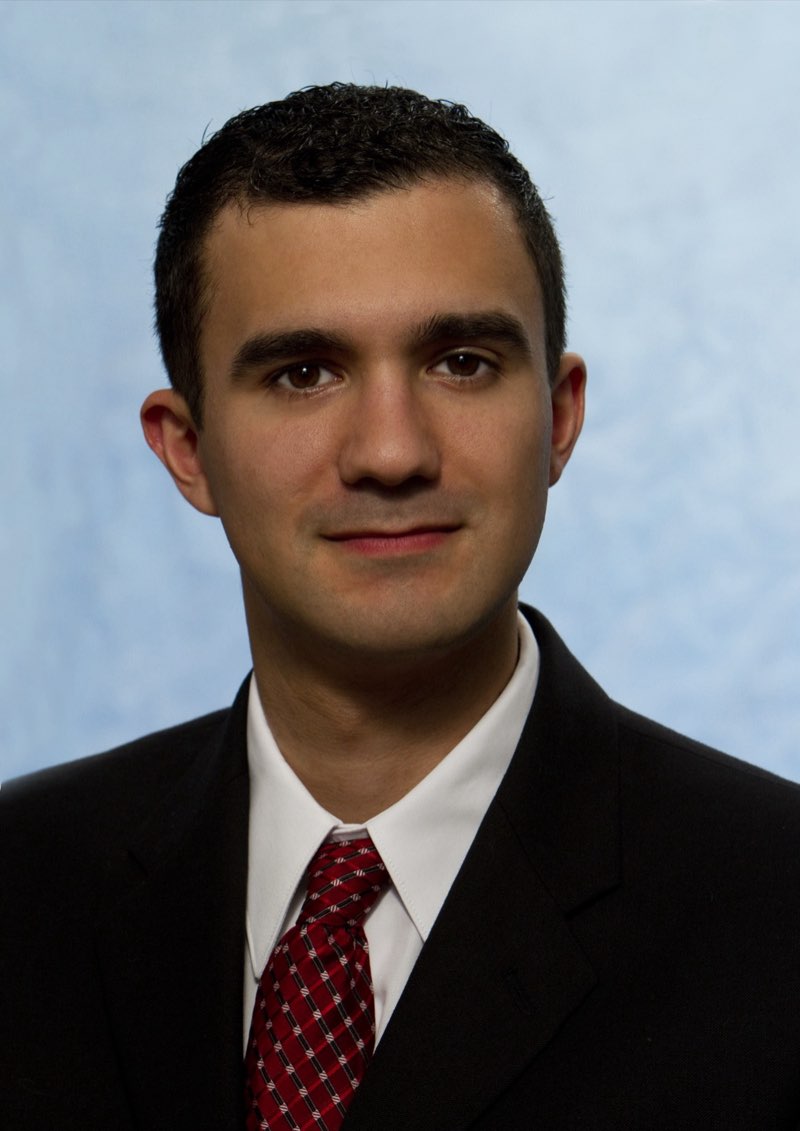
By Ryan S. Sultan, MD
Assistant Professor of Clinical Psychiatry, Columbia University Irving Medical Center
Double Board-Certified in Adult Psychiatry & Child/Adolescent Psychiatry
Published:
Quick Answer: ADHD and Autism Together (AuDHD)ADHD and autism co-occur frequently — estimates commonly range from 30 to 80 percent depending on population and how it's measured. DSM-IV prohibited diagnosing both in the same person; DSM-5 removed that exclusion in 2013, but the legacy persists, and many people carry only one label while the other goes unrecognized and untreated. Stimulants work for ADHD symptoms in autistic people, with somewhat lower response and higher side-effect rates that call for slower titration rather than withheld treatment. Dr. Ryan Sultan is a Columbia University ADHD researcher and board-certified child and adolescent psychiatrist in Chelsea, Manhattan. |
Two of my areas intersect here: I'm an ADHD researcher with a 2019 JAMA Network Open study of 187,563 youths and board-certified in child and adolescent psychiatry. The combination is where a substantial number of the diagnostic errors in both conditions live.
Why the combination gets missed
A rule that ended in 2013 still shapes practice. DSM-IV explicitly prohibited diagnosing ADHD in someone with autism. DSM-5 removed the exclusion — but anyone diagnosed before 2013, or evaluated since by a clinician trained under the old framework, may carry only one label.
The practical result: autistic children whose attention and executive difficulties are attributed entirely to autism and never treated, and adults diagnosed with ADHD in whom autism was never considered.
Each explains away the other's features. Social difficulty gets attributed to ADHD impulsivity, or to autism. Sensory sensitivity to autism, or dismissed in ADHD. Executive dysfunction to either. A clinician who has landed on one diagnosis has an explanation for everything and stops looking.
Masking obscures both. People who mask effectively present as neither, at a cost that shows up as exhaustion and burnout rather than as diagnostic features.
Same surface, different mechanism
This distinction is the clinical core:
| Feature | In ADHD | In autism |
|---|---|---|
| Social difficulty | Interrupting, missing cues from inattention, impulsive responses | Difficulty reading implicit rules, different reciprocity, processing load |
| Routine | Struggles to maintain routine; craves novelty | Needs routine; distress at unpredicted change |
| Interests | Intense but shifting; novelty-driven | Sustained, deep, stable over years |
| Sensory | Understimulation-seeking, distractibility | Hyper- or hyporeactivity, sensory overload |
| Emotional dysregulation | Fast onset, fast resolution, remorse after | Overwhelm from sensory or demand load, longer recovery |
People with both often experience genuine internal conflict — needing routine and craving novelty simultaneously, wanting social connection and finding it depleting. That contradiction is one of the more reliable signals that both are present.
Treatment
ADHD medication works, with adjustments. Stimulants are effective for ADHD symptoms in autistic people. Response rates run somewhat lower and side effects — irritability, appetite suppression, emotional blunting — somewhat higher than in non-autistic ADHD.
What that means practically: start lower, titrate more slowly, and monitor irritability closely. It does not mean withholding treatment. Untreated ADHD carries real, measured harms — my 2021 J Adolesc Health study documented elevated suicide attempts, school expulsion, and substance use — and autistic people are not exempt from them.
Non-stimulants — atomoxetine, guanfacine — are worth considering where irritability is prominent. Guanfacine has particular utility across both presentations.
Antipsychotics warrant caution. Risperidone and aripiprazole carry FDA indications for irritability in autism and are genuinely useful in specific circumstances. They are also the default reached for too quickly in autistic children with behavioral difficulty, frequently without addressing untreated ADHD, unrecognized anxiety, pain, sleep disruption, or an environment producing the behavior. My most-cited research is about exactly this pattern in youth with ADHD, and it shapes how I approach it.
Environment before medication, where the environment is the problem. Sensory accommodation, predictability, and reduced demand load resolve a great deal that would otherwise be medicated.
Therapy needs adapting. Standard CBT protocols assume interoceptive awareness and social inference that may work differently. DBT skills — particularly distress tolerance — translate well. Anxiety driven by sensory load responds to accommodation, not to exposure.
Related
ADHD psychiatrist NYC · Adult autism assessment · Autism evaluation for children · Adult ADHD evaluation · ADHD and anxiety · Child psychiatry · Autism psychiatry
Frequently Asked Questions
Can you have both ADHD and autism?
Yes. Co-occurrence estimates commonly range from 30 to 80 percent depending on population and how it's measured. DSM-IV prohibited diagnosing both; DSM-5 removed that exclusion in 2013.
Why wasn't I diagnosed with both?
Most likely because you were evaluated before 2013, or by a clinician trained under the DSM-IV exclusion. Each condition also explains away the other's features, so a clinician who has settled on one has an account for everything and stops looking.
What is AuDHD?
An informal community term for co-occurring autism and ADHD. It isn't a clinical diagnosis — the formal version is dual diagnosis of both — but it describes a real and common presentation.
Do stimulants work if I'm autistic?
Yes, though response rates are somewhat lower and side effects somewhat more common than in non-autistic ADHD. That warrants slower titration and closer monitoring for irritability, not withholding treatment.
Why do I need routine and also get bored by it?
That contradiction is characteristic of co-occurring ADHD and autism — an autistic need for predictability alongside an ADHD drive for novelty. It's one of the more reliable indicators that both are present.
Should my autistic child be on an antipsychotic for behavior?
Sometimes, but not as a default. Behavioral difficulty in autistic children frequently reflects untreated ADHD, unrecognized anxiety, pain, sleep disruption, or environmental demand. My most-cited research documents antipsychotics being prescribed to young people without appropriate indication, and I approach it accordingly.
Reviewed by Ryan S. Sultan, MD
Assistant Professor of Clinical Psychiatry, Columbia University Irving Medical Center
Board Certified — Adult Psychiatry (2015) and Child & Adolescent Psychiatry (2016), ABPN
NPI 1972893642
Psychotherapy training
Psychoanalytic psychotherapy — Emory University Psychoanalytic Institute; Columbia University Center for Psychoanalytic Training and Research
Cognitive Behavioral Therapy — trained at Weill Cornell Medicine during child psychiatry fellowship (Avital Falk, PhD; Angela Chiu, PhD); contributed to MATCH-ADTC workbook materials for youth
Dialectical Behavior Therapy — DBT skills within individual psychotherapy
EMDR · Exposure and Response Prevention
Certified Mind-Body Medicine Physician — Benson-Henry Institute for Mind Body Medicine, Massachusetts General Hospital (Harvard Medical School teaching affiliate)
Licensure
New York — License #275559
Virginia — License #0101269261
Montana — License #MED-PHYS-LIC-156069 (active, exp. 03/31/2027)
Florida — Registered Out-of-State Telehealth Provider #TPME5432 (telehealth only)
Verify every credential → ryansultan.com/credentials
Columbia · NewYork-Presbyterian · Google Scholar · PubMed · ORCID 0000-0003-2061-247X
Practice: Integrative Psych, 80 Eighth Avenue, Chelsea, Manhattan, NY 10011
Last updated: August 7, 2026
Educational information only. Not medical advice. Reading this page does not establish a physician–patient relationship.