Home > Autism Evaluation NYC
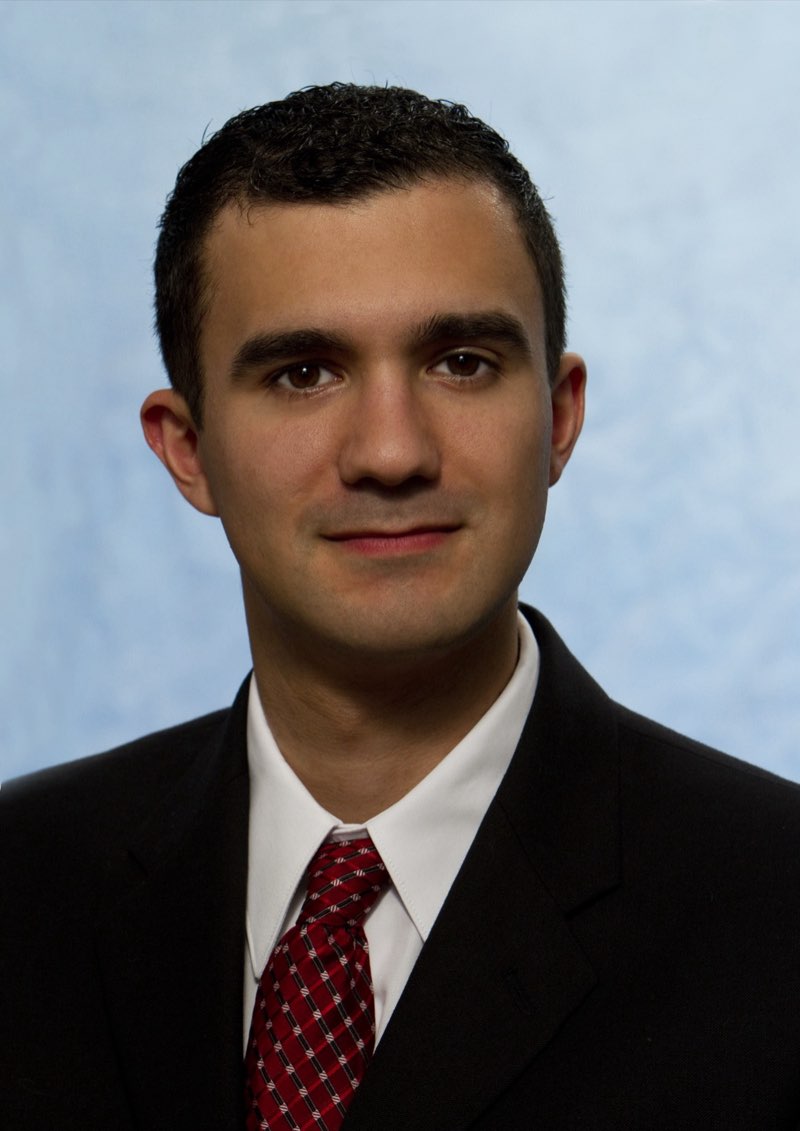
By Ryan S. Sultan, MD
Assistant Professor of Clinical Psychiatry, Columbia University Irving Medical Center
Double Board-Certified in Adult Psychiatry & Child/Adolescent Psychiatry
Published:
Quick Answer: Autism Evaluation for Children in NYCAutism is a clinical diagnosis under DSM-5-TR. A psychiatric autism evaluation with Dr. Sultan includes detailed developmental history, clinical observation, standardized screening, school input, and systematic assessment of co-occurring conditions — ADHD, anxiety, depression, OCD, and sleep. It does not include ADOS-2 administration or cognitive testing; where those are needed, he refers families to a multidisciplinary developmental assessment rather than substitute for it. Dr. Ryan Sultan is a board-certified child and adolescent psychiatrist in Chelsea, Manhattan, and Columbia University faculty. |
What I do and don't do — plainly
What a psychiatric autism evaluation with me includes:
- Detailed developmental history from birth forward
- Clinical observation and interaction across the visit
- Standardized screening instruments appropriate to age
- School and collateral input with your consent
- Systematic assessment of co-occurring conditions — ADHD, anxiety, depression, OCD, sleep, and gastrointestinal issues
- A diagnostic conclusion and a plan
What it does not include:
- ADOS-2 administration
- Cognitive or IQ testing
- Speech-language assessment
- Occupational therapy or sensory processing evaluation
For many children, a psychiatric evaluation answers the diagnostic question. For others — particularly where the presentation is subtle, where an intellectual disability or language disorder is in question, or where a school district requires specific documentation — a multidisciplinary developmental assessment is the right referral, and I will tell you that rather than stretch what I can do.
Vague scope is how families end up with an evaluation that doesn't do what they needed. So: ask me before booking what you're actually trying to accomplish, and I'll tell you whether this is the right appointment.
What the diagnosis requires
DSM-5-TR:
Persistent deficits in social communication and social interaction across multiple contexts — social-emotional reciprocity, nonverbal communicative behaviors, and developing and maintaining relationships.
Restricted, repetitive patterns of behavior, interests, or activities — at least two of: stereotyped movements or speech, insistence on sameness and distress at change, highly restricted fixated interests, and hyper- or hyporeactivity to sensory input.
Symptoms present in early development, causing clinically significant impairment, and not better explained by intellectual disability alone.
Severity is specified by level of support required — Level 1, 2, or 3 — which is a statement about support needs, not about worth or capability.
What I focus on clinically
I am a psychiatrist, and the honest account of my value here is specific: I don't treat autism. I treat what co-occurs with it.
That is not a hedge — it's where the functional gains actually come from, and it is chronically mishandled.
- ADHD co-occurs in a large proportion of autistic young people. Until DSM-5 the two couldn't be diagnosed together, and that legacy still causes ADHD to go untreated in autistic children whose attention difficulties get attributed entirely to autism.
- Anxiety is substantially elevated and often driven by sensory load, unpredictability, and social demand rather than by a primary anxiety disorder — which means it responds to different interventions than standard anxiety treatment.
- Depression, particularly in adolescence as social differences become more salient.
- OCD — distinguishing obsessive-compulsive symptoms from autistic repetitive behaviors matters, because the treatments differ entirely.
- Sleep disorders, which amplify everything else.
Medication does not treat core autism features. It treats these, and treating them well is frequently the difference between a child who is struggling and one who isn't.
Framing
I evaluate and support. I don't offer treatment aimed at making an autistic child appear non-autistic, and I don't frame autism as something to be remediated.
Where a child is distressed, impaired, or unable to participate in things they want to participate in, that's what we work on. Where a difference is simply a difference, it isn't a treatment target.
Related
ADHD and autism · Adult autism assessment · Child psychiatry · Adolescent psychiatry · Anxiety · OCD · Autism psychiatry
Frequently Asked Questions
Can a psychiatrist diagnose autism?
Yes. Autism is a clinical diagnosis, and a board-certified child and adolescent psychiatrist can make it through developmental history, clinical observation, standardized screening, and collateral information. Some situations warrant a fuller multidisciplinary developmental assessment instead.
What's the difference between a psychiatric evaluation and a full developmental assessment?
A psychiatric evaluation covers history, observation, screening, and co-occurring conditions. A multidisciplinary developmental assessment adds ADOS-2 administration, cognitive and language testing, and often occupational therapy evaluation. The second is more thorough, more expensive, and not always necessary.
Do you do ADOS testing?
No. Where ADOS-2 administration is needed — subtle presentations, complex differential, or specific school district requirements — I'll refer you rather than substitute a less appropriate assessment.
At what age can autism be diagnosed?
Reliable diagnosis is often possible from around 18 to 24 months, though many children — particularly those without language delay and those who mask effectively — are identified considerably later, sometimes not until adolescence or adulthood.
Can a child have both autism and ADHD?
Yes, and it's common. DSM-5 permitted dual diagnosis for the first time in 2013. Before that the exclusion meant ADHD went untreated in autistic children, and that pattern still persists in practice.
Does medication treat autism?
No medication treats core autism features. Medication treats co-occurring conditions — ADHD, anxiety, depression, OCD, sleep disorders — and treating those well is usually where the largest functional improvements come from.
Reviewed by Ryan S. Sultan, MD
Assistant Professor of Clinical Psychiatry, Columbia University Irving Medical Center
Board Certified — Adult Psychiatry (2015) and Child & Adolescent Psychiatry (2016), ABPN
NPI 1972893642
Psychotherapy training
Psychoanalytic psychotherapy — Emory University Psychoanalytic Institute; Columbia University Center for Psychoanalytic Training and Research
Cognitive Behavioral Therapy — trained at Weill Cornell Medicine during child psychiatry fellowship (Avital Falk, PhD; Angela Chiu, PhD); contributed to MATCH-ADTC workbook materials for youth
Dialectical Behavior Therapy — DBT skills within individual psychotherapy
EMDR · Exposure and Response Prevention
Certified Mind-Body Medicine Physician — Benson-Henry Institute for Mind Body Medicine, Massachusetts General Hospital (Harvard Medical School teaching affiliate)
Licensure
New York — License #275559
Virginia — License #0101269261
Montana — License #MED-PHYS-LIC-156069 (active, exp. 03/31/2027)
Florida — Registered Out-of-State Telehealth Provider #TPME5432 (telehealth only)
Verify every credential → ryansultan.com/credentials
Columbia · NewYork-Presbyterian · Google Scholar · PubMed · ORCID 0000-0003-2061-247X
Practice: Integrative Psych, 80 Eighth Avenue, Chelsea, Manhattan, NY 10011
Last updated: August 7, 2026
Educational information only. Not medical advice. Reading this page does not establish a physician–patient relationship.