Home > Adolescent Psychiatrist NYC
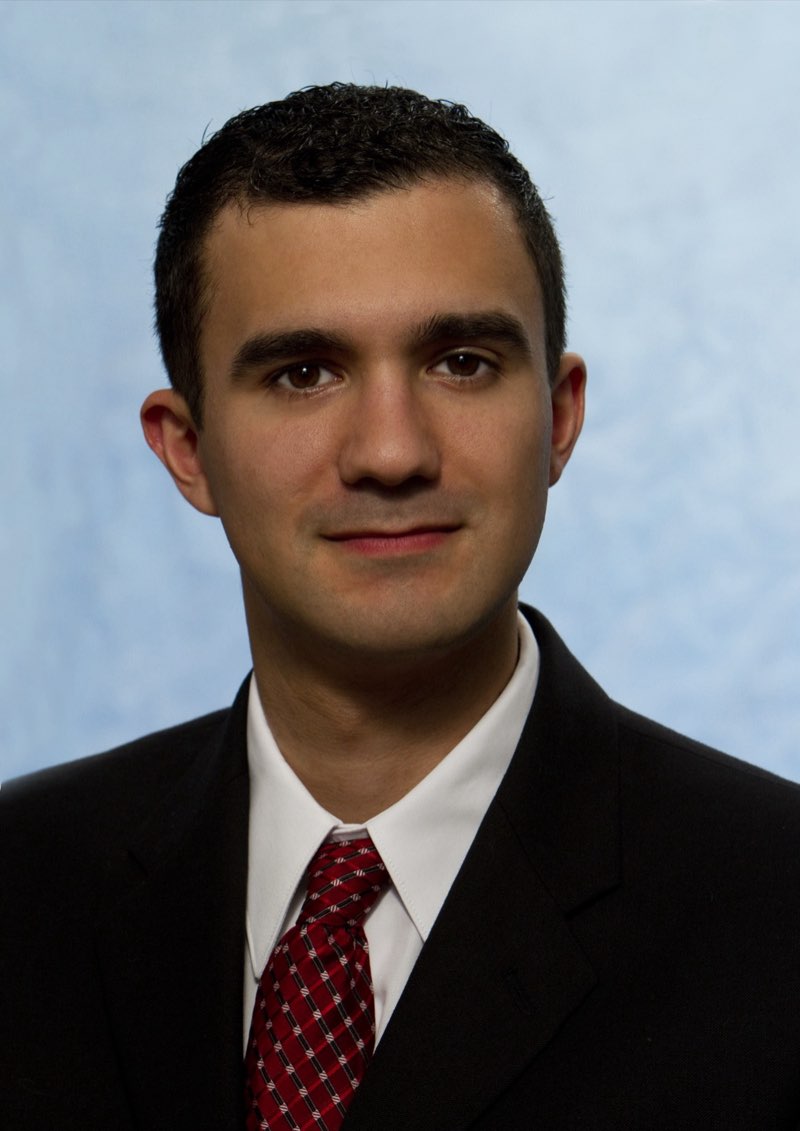
By Ryan S. Sultan, MD
Assistant Professor of Clinical Psychiatry, Columbia University Irving Medical Center
Double Board-Certified in Adult Psychiatry & Child/Adolescent Psychiatry
Published:
Quick Answer: Adolescent Psychiatrist in NYCDr. Ryan Sultan is board-certified in both Child & Adolescent and Adult Psychiatry, an Assistant Professor at Columbia University, and holds an NIH NIDA K12 award studying substance use and mental health in young people. Adolescent psychiatry raises questions distinct from child and adult care — confidentiality, driving safety, cannabis and substance use, stimulant diversion, and the transition to adult treatment — and his published research directly concerns several of them. He sees teens and college-age young adults in Chelsea, Manhattan and by telehealth. |
Adolescents are not large children or small adults, and treating them as either is where most of this goes wrong.
The clinical questions that are specific to this age
Confidentiality. Teenagers do not disclose honestly to a clinician who reports everything to their parents. They also cannot be treated in a vacuum from their family. I set this out explicitly at the start, with everyone in the room: what stays between us, what doesn't, and where the line is. New York law gives minors specific rights around certain categories of care. Being clear about this at the outset is the difference between a teenager who tells you the truth and one who doesn't.
Substance use — and cannabis specifically. This is my research area. I hold an NIH NIDA K12 award studying substance use in young people, and my 2021 study found adolescents with untreated ADHD at aOR 2.2 for cannabis and 2.6 for cocaine.
I can give parents and teenagers the actual data rather than either alarmism or dismissal. Daily high-potency cannabis use is associated with substantially elevated psychosis risk. Occasional use in a 19-year-old is a different conversation from daily use in a 15-year-old. My Pediatrics work on NYC dispensary access found licensed shops checked ID 100% of the time and unlicensed shops 10%, with most sitting near a school — which is the practical reality behind the policy debate.
Driving. Adolescents with ADHD carry 36–62% elevated crash risk. Medication reduces it substantially. This is one of the most concrete arguments for treatment and it rarely comes up in appointments. More here.
Diversion. Stimulant sharing and selling is common on high school and college campuses. I discuss it directly with patients rather than pretending it doesn't happen, and I prescribe with it in mind.
Transition to adult care. Because I'm board-certified in both adult and child psychiatry, patients don't have to change clinicians at 18 — the point at which continuity matters most and is most often lost.
College students
The college-age window is where a great deal of psychiatric illness first appears, and where care fragments worst: a psychiatrist at home, a counseling center at school, no one coordinating, and a prescription that runs out mid-semester.
I treat students at home in New York and, through telehealth licensure, in Virginia, Montana, and Florida — which covers continuity across breaks and semesters for a meaningful share of students.
Controlled substances including stimulants carry specific regulatory requirements for telehealth prescribing that change periodically. I'll be direct about what's possible for your situation.
What I evaluate and treat
ADHD · Anxiety including social anxiety and school avoidance · Depression · Cannabis and substance use · OCD · Autism in adolescents · Emerging bipolar and psychotic presentations, where early accurate diagnosis changes the trajectory
For parents
You are likely reading this because something has changed and you don't know how serious it is.
What I'll give you: a real diagnostic answer rather than a label applied quickly, an explanation of what the evidence actually supports, and a plan with checkpoints. What I won't do is medicate a teenager whose problem is sleep, school placement, family conflict, or a substance nobody has asked about.
Related
Child psychiatry · ADHD · Addiction and substance use · Anxiety · DBT · ADHD in adolescents
Frequently Asked Questions
What does my teenager tell you that I won't hear about?
I set confidentiality boundaries explicitly at the first appointment with everyone present. Generally, day-to-day content stays between us, while anything involving serious risk to your child or someone else is shared. Adolescents who know the rules disclose more honestly, which makes treatment work.
My teenager is using cannabis. How worried should I be?
It depends on frequency, potency, and age. Daily use of high-potency products in a younger adolescent carries meaningfully elevated psychosis risk and interferes with treatment for anxiety, depression, and ADHD. Occasional use in an older teenager is a different clinical picture. This is my research area and I can give you the data rather than a position.
Can my college student stay with you while away at school?
Often yes. I'm licensed in New York, Virginia, and Montana, and registered as an out-of-state telehealth provider in Florida. Controlled substance prescribing by telehealth carries specific requirements that I'll explain for your situation.
At what age do you stop seeing patients?
I don't. I'm board-certified in both Child & Adolescent and Adult Psychiatry, so patients can continue through the transition to adulthood without changing clinicians.
Do stimulants cause substance abuse in teenagers?
The evidence points the other way. Two decades of data indicate treated ADHD is associated with lower substance use risk than untreated ADHD. Untreated ADHD is the risk factor. More detail here.
Will my teenager need medication?
Sometimes. Frequently the more useful interventions are therapy, sleep correction, school accommodation, or addressing a substance nobody has asked about. I'll tell you which I think it is.
Reviewed by Ryan S. Sultan, MD
Assistant Professor of Clinical Psychiatry, Columbia University Irving Medical Center
Board Certified — Adult Psychiatry (2015) and Child & Adolescent Psychiatry (2016), ABPN
NPI 1972893642
Psychotherapy training
Psychoanalytic psychotherapy — Emory University Psychoanalytic Institute; Columbia University Center for Psychoanalytic Training and Research
Cognitive Behavioral Therapy — trained at Weill Cornell Medicine during child psychiatry fellowship (Avital Falk, PhD; Angela Chiu, PhD); contributed to MATCH-ADTC workbook materials for youth
Dialectical Behavior Therapy — DBT skills within individual psychotherapy
EMDR · Exposure and Response Prevention
Certified Mind-Body Medicine Physician — Benson-Henry Institute for Mind Body Medicine, Massachusetts General Hospital (Harvard Medical School teaching affiliate)
Licensure
New York — License #275559
Virginia — License #0101269261
Montana — License #MED-PHYS-LIC-156069 (active, exp. 03/31/2027)
Florida — Registered Out-of-State Telehealth Provider #TPME5432 (telehealth only)
Verify every credential → ryansultan.com/credentials
Columbia · NewYork-Presbyterian · Google Scholar · PubMed · ORCID 0000-0003-2061-247X
Practice: Integrative Psych, 80 Eighth Avenue, Chelsea, Manhattan, NY 10011
Last updated: August 7, 2026
Educational information only. Not medical advice. Reading this page does not establish a physician–patient relationship.