Home → Blog → Which Kids Are Overmedicated? What the Prescribing Data Show
|
TL;DR: The stimulant increase everyone's arguing about is concentrated in adults; among children it has been stable or declining. Only 0.8% of American three-to-five-year-olds fill a prescription for any stimulant, antidepressant, or antipsychotic in a year. But there is a real pediatric overprescribing problem, and it involves a different drug: among 187,563 young people with a new ADHD diagnosis, 2.6% were started on an antipsychotic within the year, and almost half of them had never tried a stimulant first. The problem is fit: the right drug, for the right diagnosis, in the right order. |
Which Kids Are Overmedicated? What the Prescribing Data Show
By Ryan S. Sultan, MD
Assistant Professor of Clinical Psychiatry, Columbia University Irving Medical Center
Double Board-Certified in Adult Psychiatry & Child/Adolescent Psychiatry
Published:
|
Quick Answer: National prescribing data covering more than six million young people offer reassurance about population-level medication use in American children: annual use of any stimulant, antidepressant, or antipsychotic was 0.8% for ages 3 to 5, 5.4% for ages 6 to 12, and 7.7% for ages 13 to 18. Antipsychotic use peaks at 1.3%, at age 16. The much-discussed rise in stimulant prescribing over the past decade has been concentrated in adults, particularly women aged 15 to 44 and men aged 25 to 44. Meanwhile a genuine and specific overprescribing problem does exist in children, and it involves a different drug class from the one under debate: among 187,563 commercially insured youths with a new ADHD diagnosis, 2.6% started an antipsychotic within a year, and 47.9% of them had never filled a stimulant prescription first. Only 52.7% had any diagnosis that would justify an antipsychotic. The useful question is whether the right child is getting the right drug, in the right order, with someone actually measuring whether it works. |
|
The claim that American children are broadly overmedicated with psychiatric drugs is not supported by national prescribing data. CDC MMWR data (Danielson et al., 2023, MarketScan commercial claims, enrollees aged 5-64) show prescription stimulant fills rose from 3.6% in 2016 to 4.1% in 2021, with the increase concentrated among females aged 15-44 and males aged 25-44, each rising more than 10% during 2020-2021, while use remained stable or declined among children and adolescents overall. In national prescribing data covering 6,351,482 young people (Sultan et al., Journal of Child and Adolescent Psychopharmacology, 2018), only 0.8% of children aged 3-5 filled a prescription for any stimulant, antidepressant, or antipsychotic in a year, and antipsychotic use peaked at just 1.3% at age 16. The genuine pediatric overprescribing signal is narrower and involves a different drug class: among 187,563 commercially insured youths aged 3-24 with a new ADHD diagnosis (Sultan et al., JAMA Network Open, 2019, MarketScan 2010-2015), 2.6% started an antipsychotic within a year, and 47.9% of those had never filled a stimulant first. Only 52.7% had any FDA-indicated or evidence-supported diagnosis for antipsychotic treatment. The problem in youth psychopharmacology is miscalibration rather than volume: the right patient, right diagnosis, right sequence, right monitoring, and periodic reassessment. |
Washington says kids are overmedicated. The prescribing data tell a more specific story.
On May 4, 2026, the Department of Health and Human Services announced a Make America Healthy Again action plan to curb what it called psychiatric overprescribing in children, including a federal working group to examine prescribing patterns for stimulants, SSRIs, antipsychotics, and mood stabilizers in young people. The American Psychiatric Association pushed back. So did a lot of parents whose kids are doing well on medication and who felt, again, that they were being told they'd done something wrong.
I want to make an unpopular argument: both sides of that fight are answering a question that doesn't have a useful answer.
Here's a number that rarely makes it into the coverage. In national prescribing data covering 6,351,482 young people, the share of American children aged 3 to 5 who filled a prescription for any stimulant, antidepressant, or antipsychotic over a full year was 0.8%. Eight children in a thousand. At ages 6 to 12 it's 5.4%, and at 13 to 18 it's 7.7%. Antipsychotics, the class that worries me most, peak at 1.3%, and the peak comes in adolescence, at age 16.
Those figures sit roughly in line with, or below, community estimates of how many kids actually have these conditions. A country medicating its toddlers into submission would produce very different numbers.
And yet I've seen children I'd describe as overmedicated. Not many. In each case the problem was fit: the wrong drug, started in the wrong order, with nobody tracking whether it helped.
The stimulant increase is mostly adults, and mostly women
The CDC analyzed commercial insurance claims for enrollees aged 5 to 64 between 2016 and 2021. Overall stimulant prescription fills went from 3.6% to 4.1%. That's a real increase, and it's worth understanding. But the growth wasn't evenly spread. Fills among females aged 15 to 44 and males aged 25 to 44 each rose by more than 10% during 2020 and 2021. Among children and adolescents as a whole, use was stable or declining.
One honest caveat, because the age bands matter and people keep collapsing them. The fastest-growing female band starts at 15, which means adolescent girls are inside that increase, and the under-18 picture did shift for that group. The national rise, however, is dominated by adults and young adults, and within younger people it shows up in teenage girls rather than in small children.
That distinction should change the policy conversation completely. A federal effort framed around overmedicated kids is pointed at a population where prescribing has been flat.
Several forces likely drove the adult climb. Telehealth expanded fast during the pandemic, and the requirement for an in-person visit before a stimulant prescription was relaxed. Recognition of adult ADHD improved. Recognition of ADHD in women and girls improved a great deal, which matters because the inattentive presentation without disruptive behavior was missed for decades in exactly that group. Some of the increase probably reflects prescribing that wouldn't survive a careful diagnostic interview.
All of those can be true at once. None of them establishes that the prescribing is wrong. A rise in volume tells you the number changed; whether the people receiving the drug needed it is a separate question, and the public argument keeps merging the two.
Seventeen years of data: the drug classes are moving in opposite directions
The CDC window is short, 2016 to 2021. There's now a longer view. In April 2025, HHS's Office of the Assistant Secretary for Planning and Evaluation published all-payer retail dispensing data for ages 3 to 17 covering 2006 through 2023. If you believe the surge story, these are the strangest numbers in the whole debate.
Stimulants went from 5.0% of children in 2006 to a peak of 5.9% in 2011, then drifted to about 5.3% by 2023. Flat for over a decade. Antipsychotics fell from 1.3% to 1.1%. Mood stabilizers fell from 1.0% to 0.8%. The one class that genuinely rose is the SSRIs: 1.5% in 2006 to 3.6% in 2023, peaking at 3.8% in 2022, with the growth concentrated in adolescent girls after March 2020. That rise tracks a documented rise in adolescent depression plus a deliberate push to expand access, which is exactly why prescribing growth and overprescribing are different claims.
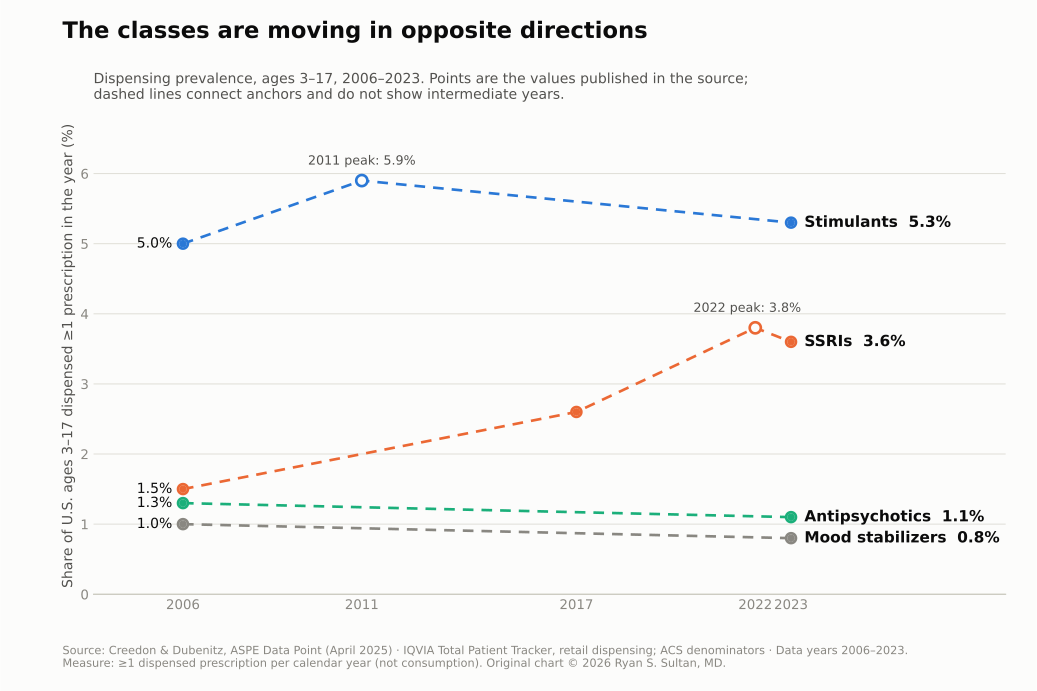
Two honest footnotes. Dispensing means at least one fill in a year rather than actual consumption. And since 2022 the flat stimulant line partly reflects families who couldn't fill the prescription at all; I've covered the stimulant shortage and the insurance obstacle course around it separately. Every national trend number behind this article lives on my youth psychiatric medication statistics page.
A system can undertreat and overtreat at the same time
This is the part that gets lost. Overprescribing and underprescribing are two failure modes that coexist happily in the same health system, often in the same clinic, sometimes in the same child. The public debate treats them as opposite ends of one dial. Clinical reality holds both at once.
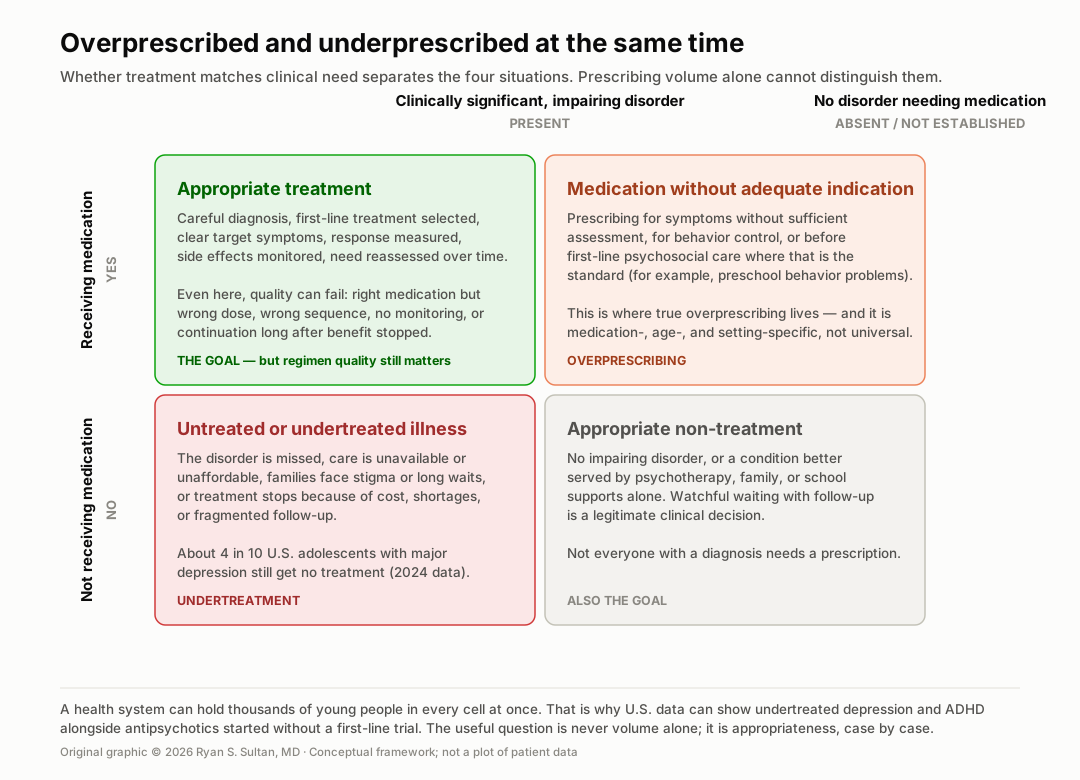
At any diagnostic threshold you pick, a restrictive line misses people who would have benefited, and a permissive line pulls in people with less impairment and less to gain. No threshold sorts perfectly. Where you should put it depends on how effective the treatment is and how much burden it carries.
There's a real-world illustration of this in the treatment literature. As ADHD prescribing expanded, the measured protective association between medication and serious outcomes like unintentional injury, traffic crashes, and crime got smaller, though it stayed statistically significant. That finding belongs to Li and colleagues, whose Swedish study I'll come back to below. In the editorial that ran alongside it, which I wrote with David Saunders and Jeremy Veenstra-VanderWeele in JAMA Psychiatry in 2025, we argued that this attenuation wasn't fully explained by shifting demographics.
That's the threshold effect showing up in real data. When treatment reaches people who were less severely impaired to begin with, the average absolute benefit falls, because there was less catastrophic risk to prevent. That's arithmetic, and it leaves the question of whether the drug works untouched. Think about statins. Give them to people who've already had a heart attack and the benefit per patient is large. Give them to people with mildly elevated cholesterol and no other risk factors and the benefit per patient shrinks, because most of them weren't going to have a heart attack this year. Nobody reads that shrinkage as a failure of statins. It shows that where you draw the line changes what you get.
So when the volume of ADHD prescribing rises and the average effect size falls, that's expected, and it's an argument for better targeting. Reading it as a reason to treat fewer people, or as evidence that the medication has stopped working, misreads the arithmetic.
The bigger number is the kids who get nothing
If you want to know which failure cell of that matrix holds the most American children, look at untreated illness.
In the 2022 National Survey of Children's Health, 53.6% of children with current ADHD were taking ADHD medication, down from 62.0% in 2016, and 30.1% were receiving no ADHD treatment of any kind. That's with 58.1% of current cases rated moderate or severe by their own parents.
Depression looks similar, with one piece of genuinely good news. In the 2024 National Survey on Drug Use and Health, 60.6% of adolescents with a past-year major depressive episode received treatment, up from 40.0% in 2021. The survey was redesigned in 2022, so trust the direction more than the exact size of that jump; either way, roughly four in ten still got nothing. And treatment isn't evenly distributed. In the 2024 data, 67.7% of White adolescents with major depression got treatment versus 44.7% of Black adolescents.
Any federal working group on pediatric overprescribing needs those numbers in front of it.
Here's the prescribing problem nobody's arguing about
In 2019 my colleagues and I published a cohort study in JAMA Network Open using MarketScan commercial claims from 2010 to 2015. We followed 187,563 young people aged 3 to 24 who had a new ADHD diagnosis and no recent diagnosis of any condition for which antipsychotics are FDA-indicated.
In the year after diagnosis, 2.6% started an antipsychotic. Of those, 47.9% (95% CI, 46.5% to 49.3%) had not filled a single stimulant prescription between the ADHD diagnosis and the antipsychotic. Critically, only 52.7% (95% CI, 51.3% to 54.1%) ever received a diagnosis for which antipsychotics have an FDA or evidence-supported indication.
Nearly half the children who got a powerful metabolic-risk medication for behavior never tried the safer, better-studied, more effective first-line option.
Two honest limitations. The data run from 2010 to 2015, so they describe the middle of the last decade rather than today. And claims data can't see severe aggression, symptom severity, adherence, what the family was managing at home, or the full clinical reasoning. Some of those prescriptions were probably defensible decisions made by careful clinicians facing a crisis at 4:45 on a Friday. Nevertheless, 47.9% is far too large to dismiss as noise, and the pattern was strongest in the youngest children. I've written up the full breakdown of that study, including the drug-by-drug and age-by-age findings, separately.
Note the scope of that finding. Antipsychotics have genuine, evidence-supported roles in children: irritability in autism, bipolar disorder, psychotic disorders, Tourette disorder, and severe aggression that hasn't responded to first-line care. The finding concerns sequence. We can undertreat ADHD and simultaneously overtreat its behavioral surface with a heavier drug.
The monitoring numbers are worse than the prescribing numbers
Whatever you think about which children should be on antipsychotics, the ones who are on them are supposed to get glucose and cholesterol testing, because these drugs cause weight gain, dyslipidemia, and diabetes risk. That standard is uncontested.
In 2023, per the CMS Child Core Set, the median state got both metabolic tests done for 35.2% of Medicaid children who had two or more antipsychotic prescriptions in the year. Read the denominator carefully. These are kids with repeated antipsychotic prescriptions, well past any borderline single fill, and the bar is any glucose test plus any cholesterol test at some point in the year. In the median state, nearly two-thirds of them didn't clear it. And when researchers applied the stricter test in Texas Medicaid data from 2010 to 2018, adherence to the full guideline monitoring schedule, cholesterol monitoring came in at 0.8%.
A policy conversation about pediatric psychiatric medication that skips monitoring is decoration. I keep a plain-English breakdown of what should be checked, for which drug class, on what schedule, in my medication monitoring guide.
The drug classes carry very different risks
Lumping every psychotropic into one moral category is the single most damaging habit in this conversation, and both critics and defenders do it.
Stimulants are among the most studied medications in all of child psychiatry. They're not risk-free, and anyone who tells you otherwise is selling something. Appetite suppression is common. Sleep onset gets delayed. Heart rate and blood pressure rise modestly. Some kids get irritable as a dose wears off. There are measurable effects on growth trajectory. Misuse and diversion are real, especially in adolescents and college students. Rare serious events exist. But these effects are largely dose-related, they're detectable at a routine visit, and they reverse when the medication stops.
Second-generation antipsychotics are a different proposition in a developing body. Weight gain can be substantial and fast. Dyslipidemia, insulin resistance, and elevated type 2 diabetes risk follow. Prolactin can rise. Sedation is common enough to affect school. And there's a family of movement effects that need to be named precisely, because they get blurred together constantly:
- Drug-induced parkinsonism is tremor, rigidity, and slowed movement caused by dopamine blockade. It typically improves when the dose comes down or the drug is stopped.
- Akathisia is an internal, agonizing restlessness. Patients describe it as needing to crawl out of their own skin. It's frequently mistaken for worsening agitation, which sometimes leads to a dose increase that makes it worse.
- Tardive dyskinesia is involuntary movement, often of the face and tongue, that emerges after longer exposure. It sometimes improves after stopping the drug. It can also persist.
A monitored stimulant trial in a child with impairing ADHD and a premature antipsychotic for the same child's behavior are not the same clinical decision. Treating them as interchangeable examples of overmedication is how you end up with policy that discourages the safer drug while leaving the sequencing problem untouched.
Most stimulant prescriptions don't come from psychiatrists
Here's the mechanism nobody talks about, and it's in the same national dataset. Psychiatrists and child psychiatrists wrote 51.7% to 70% of antipsychotic prescriptions to young people, but only 30.4% to 36.2% of the stimulant prescriptions.
Roughly two-thirds of stimulant prescribing for young people happens outside psychiatry, mostly in primary care and pediatrics, in visits that are frequently fifteen minutes long. Pediatricians deserve none of the blame here. There are around 7,000 child and adolescent psychiatrists in the United States for a population of roughly 70 million children. The math doesn't work, and pediatricians absorbed the shortfall because someone had to.
But it explains the shape of the problem better than any theory about pharmaceutical marketing or lazy parents. Careful diagnosis takes time. Rating scales from parents and teachers take time to collect and interpret. Structured reassessment takes a scheduled visit that nobody's paying for. When the system gives fifteen minutes, you get pattern-matching. Sometimes pattern-matching is right. Sometimes it produces a child on a second and third medication because the first one was aimed at the wrong target and nobody went back to check.
If you want to fix miscalibration, fund the assessment and the follow-up. Restricting the prescription pad without doing that just moves the failure somewhere less visible.
"Just do therapy instead" assumes therapy is available
Whenever prescribing comes up, someone suggests behavioral treatment as the obvious alternative, as though it were sitting on a shelf, free, and equally effective for everything.
It isn't. While behavioral parent training for ADHD works, and for preschool-aged children the American Academy of Pediatrics recommends it before medication, which I agree with and follow, it requires a trained therapist within driving distance, an insurance plan that covers it, a copay the family can absorb, a caregiver who can leave work repeatedly during business hours, and homework done consistently between sessions. In much of the country at least one of those is missing. Waitlists of several months are ordinary. In rural areas the provider may not exist at all.
There's also a specificity issue people gloss over. For core ADHD symptoms in school-aged children, medication has the strongest evidence and the largest effect size. Behavioral and educational interventions do things medication doesn't: they improve parenting practices, classroom behavior, organizational skills, and family functioning. Those are different outcomes, and they matter in their own right. The two approaches complement each other, and pretending a parent-training course will fix core inattention the way a stimulant does sets families up to fail and then blames them for it.
For depression and anxiety the balance shifts. Psychotherapy is genuinely first-line for milder presentations, combined treatment tends to outperform either alone in moderate to severe cases, and severity, suicidality, chronicity, patient preference, and plain access all move the decision.
Leaving it untreated carries its own quantifiable risks
The framing that worries me most is the one where doing nothing is the safe default and medicating is the risk you take. Both directions carry risk.
In a study I published in the Journal of Adolescent Health in 2021, we looked at 6,483 adolescents in a nationally representative sample. 9.5% met criteria for ADHD, and 69.5% of those had at least one comorbid mental health condition. Compared with peers, adolescents with ADHD were more likely to have attempted suicide (aOR 2.9, 95% CI 1.3 to 6.6), to have perpetrated physical aggression (aOR 2.3, 95% CI 1.7 to 3.2), and to have been expelled from school or fired from a job (aOR 3.3, 95% CI 1.7 to 6.5).
I need to be careful about what that study can and can't support, because it gets misquoted, including on my own site. It did not contain detailed treatment data. It cannot tell you what medication did or didn't do, and it cannot establish that ADHD caused these outcomes or even that the ADHD came first. It describes the burden that travels with the diagnosis. That's all.
For treatment effects you need a different literature, and the useful studies there are the within-person designs, which compare the same individual during medicated and unmedicated periods and so remove the stable differences between people that confound everything else. The Li et al. study I mentioned earlier, published in JAMA Psychiatry in 2025 using Swedish registries from 2006 to 2020, found incidence rate ratios during medicated periods of 0.77 to 0.85 for self-harm, 0.87 to 0.93 for unintentional injury, 0.71 to 0.87 for traffic crashes, and 0.73 to 0.84 for crime. Quinn and colleagues found the same pattern in US claims data from 2005 to 2014: substance-related events roughly a third lower during medicated months. An honest account also includes the null. Zhang and colleagues' 2025 Swedish analysis of first events found no difference for first-time accidental injuries, so that outcome depends on how the question is asked. Those findings belong to those authors. My part was the accompanying editorial, where we argued about what the shrinking effect sizes mean.
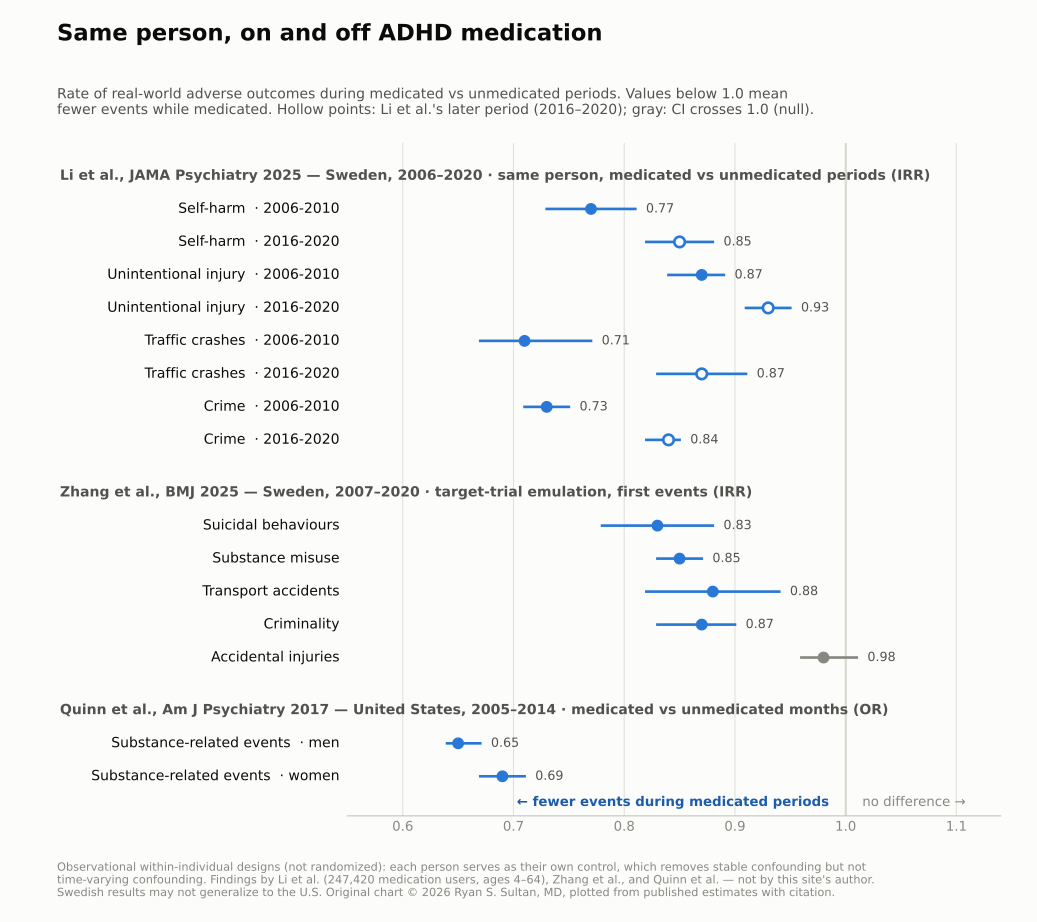
Keep four claims distinct, because they get collapsed constantly:
- ADHD is associated with an adverse outcome.
- Untreated ADHD causally increases that outcome.
- Medicated periods show lower rates of the outcome.
- Medication causally prevents the outcome.
The evidence for 1 and 3 is strong. 2 and 4 are reasonable inferences that observational data support but can't prove. Within-person designs get us closer than anything else available, and randomizing children to years of untreated ADHD to settle it isn't going to happen, nor should it.
Medication is a clinical question
A quiet cost of the overmedication conversation is that it hands people a vocabulary for judging each other. Medication as a parenting failure. Medication as a shortcut. The kid on stimulants as somehow less authentically himself. I hear versions of this in my office every week, usually from a parent who has already decided they're doing something shameful before they've told me a single symptom.
Scrutinizing safety is the job, and I've spent a good part of my career publishing exactly that kind of scrutiny. There's a difference, though, between asking whether a specific medication is right for a specific child and treating the whole category as a moral failing.
Some of the confusion is baked into the words. In a 2018 piece in the Journal of the American Academy of Child and Adolescent Psychiatry, my coauthors and I argued for neuroscience-based nomenclature, because the legacy class names actively mislead. Calling a drug an "antipsychotic" implies the child taking it has psychosis. Calling one an "antidepressant" implies depression. Families hear a diagnosis in the drug name, and so, sometimes, do clinicians. Aripiprazole prescribed for irritability in autism is not evidence of psychosis, but the label says otherwise to anyone reading the bottle.
The questions worth asking are clinical. What condition is being treated? What's the impairment? What evidence supports this intervention for this problem? Is the patient actually benefiting? What risks are being monitored? Would something less burdensome work?
Regardless of whether national prescribing volume should drift up or down, the goal is better treatment: the right intervention for the right condition, in the right sequence, with clear targets, careful monitoring, and regular reassessment.
What I'd ask at your kid's next appointment
If you take one thing from this, take this list. These are the questions I'd want a parent asking me.
| Ask this | Why it matters |
| What diagnosis is this medication treating? | The drug should be aimed at a named condition rather than a behavior that annoys adults. |
| What specific symptoms should change if it works? | Without a target you can't tell benefit from wishful thinking. |
| What did we try before this, and did we skip a first-line option? | This is the sequencing question. It's where the antipsychotic problem lives. |
| How will we measure whether it's working, and by when? | Ask for a rating scale and a date rather than an impression at the next visit. |
| What side effects are we watching, and how often? | For antipsychotics this should include weight, metabolic labs, and a movement exam. |
| When will we reassess whether this is still needed? | Medications get continued by inertia. Put a review on the calendar. |
| If my child is on more than one, what is each one for? | Polypharmacy accumulates one reasonable-seeming decision at a time. |
A clinician who welcomes those questions is doing the job properly. Reluctance to answer them, far more than the prescription itself, is the warning sign.
We have guidelines for starting. We have none for stopping.
One last number, and it's the one that convinced me the over-versus-under debate is aimed at the wrong target. A systematic review published in 2026 screened 1,390 records looking for formal clinical practice guidelines on stopping psychiatric medications in children and adolescents. It found zero.
Think about what that does to the reassessment question in the table above. Every guideline tells a clinician how to start a stimulant, an SSRI, an antipsychotic. Not one tells them how to take a child off one: who's a candidate, how fast to taper, what to watch for, how to tell relapse from withdrawal. So medications continue by inertia, and families who decide to stop often do it alone, abruptly, and badly. If the working group in Washington wants a project with no political downside, that's it. I've written a separate guide on how to stop a child's psychiatric medication safely, including why stopping alone and abruptly is the one clearly wrong answer. Until those guidelines exist, remaining vigilant about why each medication was started, and whether it's still needed, falls to the clinician and the family in the room.
Download the research
These are the peer-reviewed papers behind the numbers in this article. All are free to download.
|
Sultan RS, Correll CU, Schoenbaum M, King M, Walkup JT, Olfson M. National Patterns of Commonly Prescribed Psychotropic Medications to Young People. Journal of Child and Adolescent Psychopharmacology. 2018;28(3):158-165. Sultan RS, Wang S, Crystal S, Olfson M. Antipsychotic Treatment Among Youths With Attention-Deficit/Hyperactivity Disorder. JAMA Network Open. 2019;2(7):e197850. Sultan RS, Liu SM, Hacker KA, Olfson M. Adolescents With Attention-Deficit/Hyperactivity Disorder: Adverse Behaviors and Comorbidity. Journal of Adolescent Health. 2021;68(2):284-291. Sultan RS, Saunders DC, Veenstra-VanderWeele J. Protective Effects of ADHD Medication on Real-World Outcomes. JAMA Psychiatry. 2025. Sultan RS, Correll CU, Zohar J, Zalsman G, Veenstra-VanderWeele J. What's in a Name? Moving to Neuroscience-Based Nomenclature in Pediatric Psychopharmacology. Journal of the American Academy of Child and Adolescent Psychiatry. 2018;57(10):719-721. Additional reading: CDC MMWR: Trends in Stimulant Prescription Fills, 2016-2021 | All of Dr. Sultan's publications | PubMed: Sultan RS |
Frequently Asked Questions
Are children in the United States overmedicated with psychiatric drugs?
Not as a general population statement. In national prescribing data covering 6,351,482 young people, 0.8% of children aged 3 to 5 filled a prescription for any stimulant, antidepressant, or antipsychotic over a year, rising to 5.4% at ages 6 to 12 and 7.7% at ages 13 to 18. Antipsychotic use peaked at 1.3% at age 16. Those figures sit at or below most community estimates of the prevalence of the conditions these medicines treat. But aggregate numbers hide real problems, and a specific overprescribing signal does exist for antipsychotics given before any stimulant has been tried. Both things are true, which is why the single question of whether kids are overmedicated is the wrong question.
Has stimulant prescribing to children actually gone up?
Much less than the public conversation suggests. CDC analysis of commercial claims for enrollees aged 5 to 64 found overall stimulant fills rose from 3.6% in 2016 to 4.1% in 2021, with growth concentrated among females aged 15 to 44 and males aged 25 to 44, each up more than 10% during 2020 to 2021. Among children and adolescents overall, use was stable or declining. Because the fastest-growing female band starts at 15, adolescent girls are part of that increase, and the under-18 picture did shift for that group. The bulk of the rise, however, is adults.
Why did adult stimulant prescribing rise so quickly?
Telehealth expanded and the in-person visit requirement before a stimulant prescription was relaxed. Recognition of adult ADHD improved, and recognition in women and girls improved substantially, correcting a pattern in which inattentive presentations were missed in childhood. Some portion may reflect prescribing that wouldn't survive careful diagnostic scrutiny. An increase in volume by itself isn't evidence that the prescribing is inappropriate.
Is it a problem if my child with ADHD is prescribed an antipsychotic?
It depends entirely on why. Antipsychotics have real roles in children: irritability in autism, bipolar disorder, psychotic disorders, Tourette disorder, and severe aggression that hasn't responded to first-line treatment. What's hard to justify is starting one for ADHD or ADHD-related behavior before an adequate stimulant trial and before behavioral treatment has been attempted. Ask what target symptom it's treating, what was tried first, what benefit is being measured, and what metabolic and movement monitoring is scheduled.
Are stimulants riskier than antipsychotics for children?
No, and treating all psychiatric medications as one risk category is one of the most consequential errors in this debate. Stimulant adverse effects are mostly dose-related, monitorable, and reversible on stopping. Second-generation antipsychotics carry substantial weight gain, dyslipidemia, insulin resistance and diabetes risk, elevated prolactin, sedation, and movement effects including drug-induced parkinsonism, akathisia, and tardive dyskinesia. Drug-induced parkinsonism usually improves after the drug is reduced or stopped. Tardive dyskinesia can persist.
What should I ask at my child's next psychiatry appointment?
Ask what diagnosis the medication treats and what target symptoms should change. Ask what was tried before and whether a first-line treatment was skipped. Ask how benefit will be measured and by when, ideally with a rating scale. Ask which adverse effects are monitored and how often, including weight, metabolic labs, and movement examination for antipsychotics. Ask when the medication will be formally reassessed. If your child is on more than one psychotropic, ask what each is for and whether any can come off.
Are psychiatric medications for kids increasing?
Only one class is. In national all-payer dispensing data for ages 3 to 17 covering 2006 to 2023, stimulant dispensing has been flat since its 2011 peak and antipsychotics declined from 1.3% to 1.1%. SSRIs rose from 1.5% to 3.6%, peaking at 3.8% in 2022, with the growth concentrated in adolescent girls after March 2020. Over the same era more young people used multiple psychiatric medications at once, which deserves more attention than it gets.
Do most kids with ADHD take medication?
No. In the 2022 National Survey of Children's Health, 53.6% of children with current ADHD were taking ADHD medication, down from 62.0% in 2016, and 30.1% received no ADHD treatment of any kind. That's despite 58.1% of current cases being rated moderate or severe, and despite medication being the best-studied and most effective treatment for core symptoms in school-aged children and older.
Is it dangerous that many uses are "off-label"?
Off-label isn't a red flag by itself. Pediatric drug labels lag pediatric evidence because companies rarely rerun trials in children after adult approval. SSRIs for childhood anxiety are the clearest example: the trial evidence is strong, better than for depression, even though labeling lagged behind it. The distinction that matters is evidence-supported versus unsupported use. Ask your prescriber which one applies.
What are the risks of not treating conditions like ADHD or depression?
Quantifiable ones. Adolescents with ADHD carry roughly two- to four-fold adjusted odds of suicide attempt, physical aggression, and school expulsion or job loss in cross-sectional data. In Swedish registry studies from 2006 to 2020 comparing the same person on and off ADHD medication, medicated periods had fewer self-harm events, traffic crashes, and crimes. Untreated depression carries its own well-documented risks. Medication risks are real. Yet declining medication carries risks of its own, and it is not the safe default it's assumed to be.
How do I know if my child's medication treatment is careful?
Careful treatment is visible. The clinician names the diagnosis and the specific targets, explains what was tried or considered first, measures progress with rating scales rather than impressions, orders the monitoring that drug class requires (growth checks for stimulants, metabolic labs for antipsychotics), and schedules reassessment of whether the medication is still needed. If refills have run for years without any of that, ask for a review. Don't stop the medication on your own.
Further Reading
- Psychiatric Deprescribing in 2026: The Sequencing Problem: the 2026 federal deprescribing push, and why medication order matters more than volume (as discussed in AAMCNews)
- Is ADHD Overdiagnosed and Overmedicated? — Three decades of US prescribing trend data, with the diagnosis-versus-treatment gap
- Pediatric Antipsychotic Overuse — The full 2019 cohort findings, drug by drug and age by age, plus the foster-care disparity
- Adverse Outcomes of Untreated ADHD — What the burden literature does and doesn't establish
- ADHD Pharmacology and Natural Course — How treatment changes the trajectory of the disorder
- ADHD in Preschoolers — Where behavioral parent training comes first, and when medication is appropriate
- Stimulants With Tics — Another case where an outdated contraindication led to undertreatment
- ADHD Medication Side Effects — The full adverse-effect profile across medication classes
- Non-Stimulant ADHD Medications — When a non-stimulant is the right first choice
- Therapy Versus Medication for ADHD — What each approach actually improves
- Child Psychiatrist NYC — Evaluation and medication management for children and adolescents
- Complete ADHD Guide — Diagnosis, neurobiology, and treatment
- Dr. Sultan's Publications — Peer-reviewed research with free PDF downloads